It’s pretty fresh news still, but a lot has been said about the appointment of Alessandro Michele as the new creative director of Valentino following Pierpaolo Piccioli leaving the role just a few days ago. Like everyone else, I have a lot of thoughts about it, and I must admit that I don’t associate Michele’s designs with the Valentino brand, making me unsure how the whole thing will pan out.
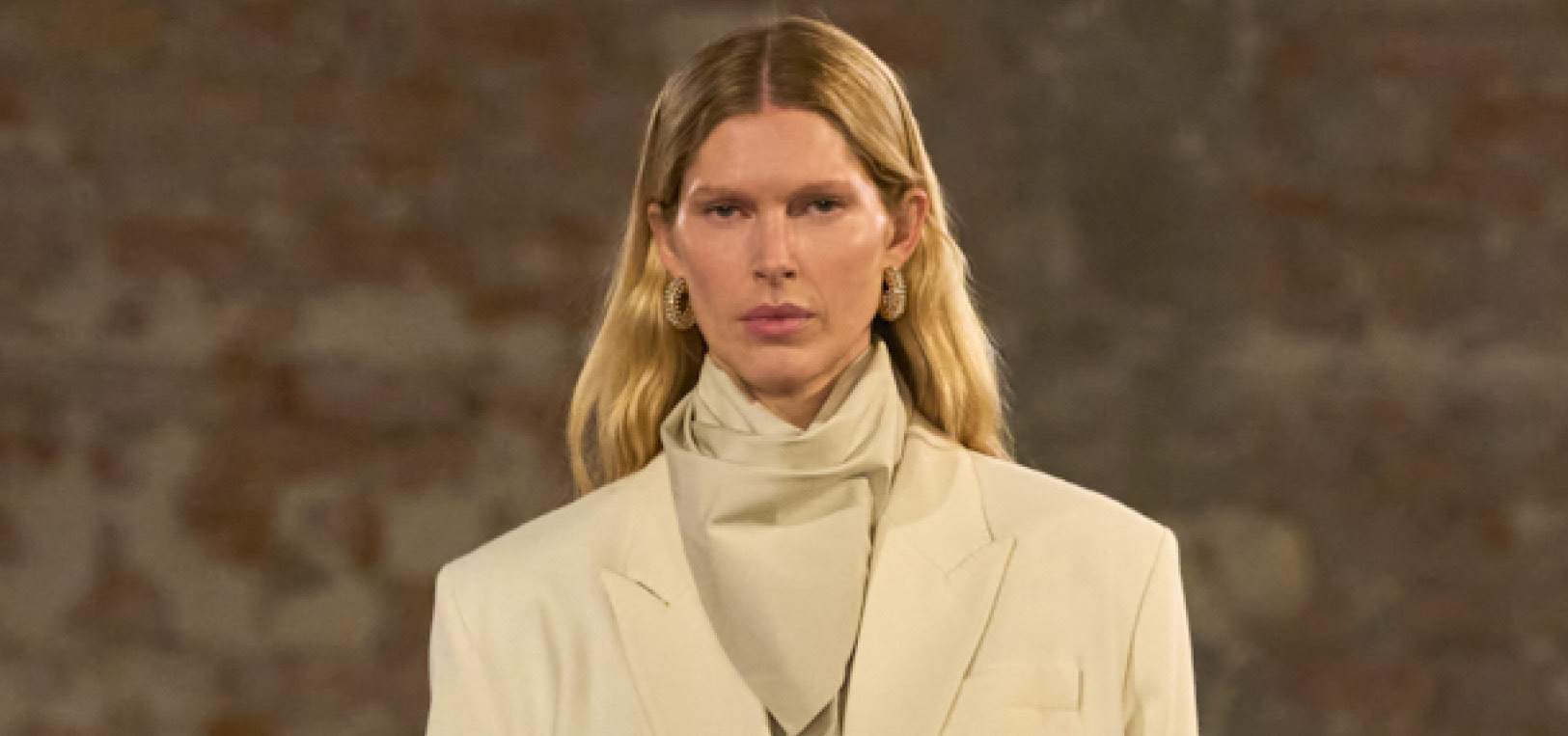
PARIS, FRANCE – MARCH 03: A model walks the runway during the Valentino Ready to Wear Fall/Winter 2024-2025 fashion show as part of the Paris Fashion Week on March 3, 2024 in Paris, France. (Photo by Victor VIRGILE/Gamma-Rapho via Getty Images)
There’s a lot to talk about – not just the events leading up to all this – but also how the often discussed segment of aspirational shoppers and the so-called democratization of fashion played a big part in both the success and downfall of Alessandro Michele at Gucci. I went through a number of news articles and press releases to put together a timeline, and I didn’t just focus on the creative directors in the story, but also the people in the more business-focused roles including CEOs and merchandisers – I will write another article focusing on the impact of people in these positions soon.
Shoppers queue to enter a Louis Vuitton luxury goods store, operated by LVMH Moet Hennessy Louis Vuitton SE, in Paris, France, on Friday, March 19, 2021. French President Emmanuel Macron is locking down several regions including the Paris area, slowing down the countrys economic recovery as it struggles to contain a third wave of the coronavirus epidemic. Photographer: Cyril Marcilhacy/Bloomberg via Getty Images
In my thoughts about all this that I’ve posted below the timeline, I make reference to my work experience at Vivienne Westwood as the ecommerce merchandiser at the company – this happened to be during the pandemic, lockdowns, and the rise of the so-called ‘aspirational shopper’ – I’m sure some of the same conversations that my colleagues and I were having during meetings at Vivienne Westwood were also being had by teams at Gucci and other companies.
TIMELINE
There’s a long time frame to cover, and a lot of people moving around, so to keep it simple I’m going to do my best to divide by year and brand, and I’m going to put this in more of a storytelling way than a ‘history book’ style. This is chronological, so I’m going to be skipping from Gucci to Valentino throughout.
GUCCI
1994: Let’s start with Gucci, it’s 1994 and Tom Ford has just become creative director. When he’s brought in the brand is struggling.
1996: He’s not going to come into the story all that much later but he does sets the stage for somebody else – Christopher Bailey joins Gucci.
1999: By now, Gucci is worth over $4 billion.
VALENTINO
1999: In 1999, two people move from Fendi to Valentino – they are Maria Grazia Chiuri and Pierpaolo Piccioli who had spent almost ten years designing accessories at Fendi. The creative director at this time is Valentino Garavani.
2000: Jacopo Venturini joins Valentino as brand manager for both womenswear and menswear.
GUCCI
2001: In May 2001 Christopher Bailey leaves Gucci to go to Burberry; he is replaced by Alessandra Facchinetti.
2002: Somebody else is leaving Fendi, this time to join Gucci – it’s Frida Giannini and she’s joining as design director of handbags. That same year she brings in somebody else from Fendi – their senior accessories designer Alessandro Michele.
2004: Tom Ford leaves Gucci and Alessandra Facchinetti is made designer of womenswear, while Frida Giannini is made head of women’s accessories, but after two collections Facchinetti is replaced by Giannini.
VALENTINO
2004: Jacopo Venturini leaves Valentino and goes to Prada, and speaking of Prada in 2005 Sabato De Sarno joins the brand – I’m sure he’s a familiar name.
GUCCI
2006: Frida Giannini is promoted to the role of creative director.
VALENTINO
2007: Valentino Garavani steps down as creative director and his replacement is Alessandra Facchinetti, who had previously worked at Gucci up until she was replaced by Frida Giannini.
2008: Alessandra Facchinetti is replaced by Maria Grazia Chiuri and Pierpaolo Piccioli as co-creative directors.
2009: Sabato De Sarno joins Valentino – in the meantime he had made the move from Prada to Dolce & Gabbana. Eventually he becomes fashion director overseeing both men’s and women’s collections.
GUCCI
2009: Frida Giannini and the then-CEO Patrizio di Marco began a relationship that allegedly made colleagues rather uncomfortable.
“There were fears that if one was hired by another company, they would both leave.”
comment reported in Fashionista article, 25th February, 2015
2011: In May 2011 Alessandro Michele is promoted to the role of associate to the creative director (ie: Frida Giannini).
2014: In September 2014 Michele becomes the creative director of Richard Ginori, an Italian fine porcelain brand that Gucci had acquired in June 2013.
2014: In December 2014, Frida Giannini announced that she was leaving Gucci – she was supposed to lead the menswear show the following January and the womenswear show the February after that. Her partner Patrizio di Marco is also leaving the company and he gets replaced by Marco Bizzarri.
2015: In 2015, Jacopo Venturini joins Gucci from Valentino (note: I couldn’t find out which month this actually happened).
2015: All of a sudden on the 12th January 2015 it’s announced that Frida Giannini is leaving Gucci earlier than expected, and there are stories swirling online that she and di Marco had been fired.
“The new CEO, Marco Bizarre [sic], reportedly found it too difficult to work with Frida Giannini and she was forced to leave immediately. Anonymous sources told reporter John Koblin that Giannini was kicked out on January 9th and left the building that same day, with a few colleagues helping to carry out her belongings.”
Fashionista article, 25th February, 2015
2015: 19th January 2015 is the day of the Autumn/Winter 2015 menswear show, and in five days the whole collection – even the seating plan – is reworked by Alessandro Michele.
“Gucci couldn’t wait for the future a second longer.”
Tim Blanks for Vogue Runway, 19th January, 2015
2015: On the 21st January, Kering releases its official press statement that Michele is the new creative director of Gucci, and on the 25th February, Gucci shows its Autumn/Winter 2015 womenswear collection by Alessandro Michele.
“The Gucci Men’s Autumn/Winter 2015-16 collection presented on 19 January . . . is a clear indication that the brand is ready to take a new direction.”
Marco Bizzarri, President and CEO of Gucci, as quoted in the press release issued by Kering, 21st January, 2015
“Alessandro Michele has both the qualities and the vision necessary to bring a new contemporary perspective to Gucci and lead the brand into an exciting new creative chapter of its history.”
François-Henri Pinault, Chairman and CEO of Kering, as quoted in the press release issued by Kering, 21st January, 2015
VALENTINO
2016: Maria Grazia Chiuri leaves Valentino to go to Dior, leaving Pierpaolo Piccioli as the sole creative director.
GUCCI
2022: On the 23rd November 2022 it is announced that Alessandro Michele is leaving Gucci. Marco Bizzarri had reportedly wanted him to change artistic direction but – if Michele’s final show for the brand (Spring/Summer 2023) is anything to go by – that didn’t happen. Sales at the brand have been stagnating.
“There are times when paths part ways because of the different perspectives each one of us may have.”
Alessandro Michele, as quoted in the press release issued by Kering, 23rd November, 2022
2023: In July 2023, Kering purchases a 30% stake in Valentino from Qatari investment fund Mayhoola as part of a deal that would allow them to take full control of Valentino by 2028.
GUCCI
2023: In September 2023, Sabato De Sarno shows his debut collection for Gucci at Milan Women’s Fashion Week, and then not long after, on the 23rd September 2023, Marco Bizzarri leaves Gucci, with Jean-François Palus taking his position.
2024: In February 2024, the annual results of the Kering group are published, and sales at Gucci are down.
“In a trying year for the group, we . . . took significant steps to further enhance the visibility and exclusivity of our Houses. We are focused on revitalizing Gucci . . .”
François-Henri Pinault, Chairman and CEO of Kering, as quoted in the 2023 annual results issued by Kering, 8th February, 2024
VALENTINO
2024: And so here we are – last Friday Valentino and Pierpaolo Piccioli made the announcement that he was leaving, and Tuesday 2nd April will be Alessandro Michele’s first day, under current CEO Jacopo Venturini, with whom he had worked at Gucci.
To tie up the whole story, and in case you were wondering what happened to the other key players: Marco Bizzarri just announced on the 28th March (2024) that he’s set up a holding company called Nessifashion.
Frida Giannini has been doing philanthropic work since 2017, and has also worked as a costume designer.
Patrizio di Marco joined the board of Dolce & Gabbana in June 2016 and became chairman of Golden Goose in September 2018.
Alessandra Facchinetti was creative director at Tod’s from 2013-16, then in 2020 was made the first creative director of Harlan + Holden, though in October last year she said that she is working on a new brand.
ASPIRATIONAL SHOPPERS AND THE DEMOCRATIZATION OF FASHION
There are a number of things that I think are important to consider about this whole thing, and one of them is the impact of aspirational shoppers and the democratization of fashion especially at the time of the pandemic.
First of all: who is the ‘aspirational shopper’? The term is used to describe those who are not regular consumers of luxury goods but rather those who make occasional purchases from luxury brands, with those purchases being of lower priced items (so-called entry-level goods). Conversely, the ‘true-luxury consumer’ spends an average of $40,000 per year on luxury goods, and this group – although only making up about 2-5% of all luxury consumers – accounts for 40% of luxury sales, with the remaining 60% coming from those who spend less than $2,200 per year on luxury. (Danzinger, Pamela N. Luxury Brands See Drop In U.S., Where Aspirational Consumers Put New Purchases On Hold. Forbes Retrieved 29th March, 2024, from Forbes.com) This data is from last year and it would seem that the percentage share of aspirational shoppers has reduced since then.
THE IMPACT OF THE PANDEMIC ON SPENDING HABITS
The pandemic really hit with full force around March 2020 – I was working at Vivienne Westwood at the time as their ecommerce merchandiser, and suddenly it was a scramble to shift the business from brick-and-mortar retail to online. With such an enormous change in circumstances, the buying team had to shift gears, and so did the design team – evening wear was suddenly out of the question as events were being cancelled and now athleisure was the order of the day. Even tailoring seemed to be a risky move as everyone was now working from home. My final day in the office before switching to working from home, I remember using the undergound and changing to the Central Line at Bank during what should have been rush hour – where normally I’d have been fighting for a spot on the tube, there were less than ten people on the platform with me.
LONDON, UNITED KINGDOM – JANUARY 06: A deserted Regent Street during England’s third lockdown on January 06, 2021 in London, England. British MPs will vote retrospectively on approving the third coronavirus lockdown for England in a bid to curb the spread of Covid-19. (Photo by Chris Jackson/Getty Images)
There were many meetings about the situation – what would customers want to buy? Would people even want to keep spending money?
But as many brands found out, customers did indeed want to spend money, and a lot of customers started spending money at luxury brands. Maybe they wanted to treat themselves during a difficult time, or maybe it was because these brands suddenly had more everyday pieces that didn’t seem as stuffy as the evening wear and tailoring they might usually have been associated with.
‘Logomania’ became a huge trend, and brands began producing more entry-level items. Perhaps aspirational spending on luxuring clothing (and bags and shoes) replaced the lipstick part of the lipstick index due to us all hiding our faces with masks. Where the entry-level products of luxury brands had traditionally been cosmetics, sunglasses, and perfume, now they were bags, clothing, and shoes… covered in logos and monograms.
COLOGNE, GERMANY – MARCH 25: Martina Maturi wearing brown Gucci monogram pants and white Dior sneakers on March 25, 2021 in Cologne, Germany. (Photo by Jeremy Moeller/Getty Images)
LONDON, ENGLAND – SEPTEMBER 16: A guest wears a Gucci monogram printed logo skirt, during London Fashion Week September 2019 on September 16, 2019 in London, England. (Photo by Edward Berthelot/Getty Images)
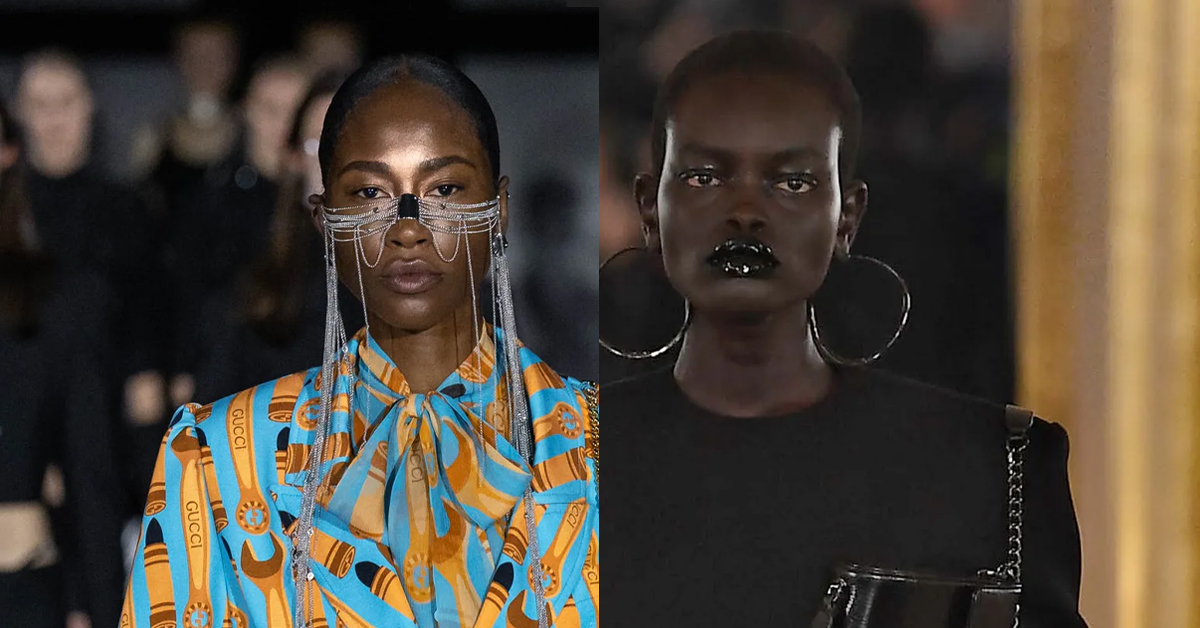
And as Gucci in particular found out, Michele’s designs which featured plenty of branding and monograms were extremely popular, and sales at the brand continued to skyrocket during the pandemic, as seen in the results posted by Kering at the time. Concurrently of course, Demna Gvasalia was putting the brand name all over Balenciaga’s offerings (having joined the brand in October 2015) and those were also selling very well. Quiet luxury was something completely antithetical, and anybody who wanted to buy luxury clothing or accessories without these loud logos seemed to be rather left out. (I am of course simplifying here as not all brands hopped on the trend, but logomania was indeed an inescapable phenomenon. I also have to mention the influence of Dapper Dan when seeing monograms being used as I don’t think his influence gets cited as much as it should be – see the Louis Vuitton monogram jacket below.)
BERLIN, GERMANY – SEPTEMBER 07: Sonia Lyson is seen wearing Balenciaga jumper dress with logo print, Balenciaga bag, Zara boots, AV sunglasses during Fashion Week Berlin on September 07, 2021 in Berlin, Germany. (Photo by Christian Vierig/Getty Images)
PARIS, FRANCE – OCTOBER 06: A guest wears a black and brown printed monogram jacket from Vuitton, a bag shaped as the Chrysler Building, outside Louis Vuitton, during Paris Fashion Week – Womenswear Spring Summer 2021, on October 06, 2020 in Paris, France. (Photo by Edward Berthelot/Getty Images)
POST-PANDEMIC CHANGES AND THE INCREASED COST OF LIVING
With the lockdowns looking like they were going to come to an end (for good), we’d have conversations at work wondering if fashion as a whole would make a complete flip from athleisure to total glam since everyone had been stuck inside for so long and was ready to get out and party. That wasn’t exactly what the flip ended up being, but there did end up being a switch from logomania to what we now call ‘quiet luxury’, often associated with brands including Brunello Cucinelli, whose founder funnily enough seems rather annoyed by the moniker.
LONDON, ENGLAND – NOVEMBER 21: A general view of the atmosphere at the opening of the Brunello Cucinelli “Solomeo In White” pop-up at Harrods on November 21, 2023 in London, England. (Photo by Dave Benett/Getty Images for Brunello Cucinelli)
“He cringes at being defined as the standard bearer of the quiet luxury craze, which he actually calls silent luxury. “I don’t want to be silent when I dress up, who on earth wants to look silent?””
Tiziana Cardini for Vogue Runway, 12th January, 2024
Post-pandemic, for a multitude of reasons, the cost of living went up and the price increases and resulting financial hardships just haven’t stopped. The reasons for price increases seem to keep piling up – Brexit, increased costs due to the pandemic, the impact of war on logistics causing shipping rates to go up and ultimately it’s the customer who feels the impact through price rises.
So the person who once was the aspirational shopper has had to rein in their spending. The people left to buy luxury are those who were always buying luxury all along – the aforementioned true-luxury consumers – and it would seem, they want to be discreet about it. No flashy logos, no excessive monogramming, but a kind of IYKYK design.
And so, Michele was asked by the powers that be at Gucci – the merchandisers, the CEOs, the people who make the decisions about what will end up on the shop floor for people to buy – to change direction. However that change in direction apparently didn’t happen, sales continued to drop, and he was ultimately let go. Back to that quote from Pinault – bringing back the ‘exclusivity’ of the brand.
The polar opposite of exclusivity – the democratization of fashion – has also become a trending topic, even more so following the recent Autumn/Winter 2024 show by The Row where there were no cameras allowed.
When I was researching the timeline above, I saw so much praise for Michele democratizing fashion through his work at Gucci, but it appears that there may be an overarching (though underlying) feeling that this had gone too far and needs to be reversed now. With certain brands raising their prices in sometimes rather abrupt ways, the perception of exclusivity can be the determining factor for the public’s acceptance of those rises. Certain brands most certainly have more exclusivity than others… even to litigious levels.
FINDING A NEW DIRECTION
And that whole pricing debate makes it clear that by democratizing fashion and opening it up to the aspirational shopper (and therefore by producing more goods at the lower end of the price range) the exclusivity of the brand is called into question. Will the consumers of the highest priced goods move to other brands who are not trying to capture the aspirational shopper? How does a brand strike the right balance, if that balance can even be reached – isn’t that what all those diffusion lines (McQ, Elizabeth + James, Marc by Marc Jacobs, to name a few) were trying to do in the mid-2010s… and we all know how that ended (hint: not good).
It would appear that within fashion, democracy and exclusivity are at opposite ends of the spectrum and brands must pick a side – it is apparently impossible for a brand to position itself in the middle and achieve positive financial results in the long run. I’m not saying that Alessandro Michele ruined Gucci’s exclusivity – that would be reducing this whole situation into a really simplistic conclusion. This is also not to say that aspirational shoppers are somehow ruining or cheapening luxury – I consider myself to be an aspirational shopper and I think there’s nothing wrong with people wanting to be able to treat themselves to something from luxury brands a few times a year. It is up to the brands themselves to decide how they distribute their price points. The resulting perception from those pricing decisions is not the fault of the aspirational shopper.
What I find very curious though, is that in bringing Michele to lead Valentino, Kering surely must know that they are taking a risk. If currently, the majority of sales will come from people who seemingly can afford to buy luxury fashion are those who want the opposite of what Michele was offering at Gucci (and he was was let go for being either unable or unwilling to offer different) why give him this role? Are they expecting him to now be able to change direction? Do Kering want Valentino to move to a totally different vision that will fall under what they know Michele can give them?
There is of course a hierarchy not just within fashion itself with larger divisions such as high street, bridge, and luxury, but there are also divisions within the luxury segment itself, and it is far easier to move down than up. Consider the different perception (and then, of course, different price points) of these brands that are all considered to fall under luxury: Hermès, Burberry, Chanel, Ralph Lauren, Kenzo, Joseph.
One of the very first things a business must do is decide where it stands within the market – not just whether it’s high street or luxury, but also where it stands within the subdivisions of that segment. The higher the position (and price point), the more exclusive and therefore less democratic it will be. To be honest, as an aspirational shopper myself, I’m not kidding myself into believing that I will be able to own items such as an Hermès Birkin bag. The Birkin is not priced for aspirational shoppers like me (but the scarfs and jewellery are). If it suddenly had a price tag that I could afford, it would also suddenly be much less exclusive. What would happen to its overall desirability if it lost its exclusivity? Would I even still want one? How much of the desire for the Birkin is derived solely from the exclusivity of it, and wanting what we cannot have?
FINAL WORDS
When word broke that Pierpaolo Piccioli was leaving Valentino, I immediately thought to myself, “What a strange coincidence that his final collection was all black looks, maybe he knew it would be his last, and it was kind of a funerary send-off.”
PARIS, FRANCE – MARCH 03: A model walks the runway during the Valentino Ready to Wear Fall/Winter 2024-2025 fashion show as part of the Paris Fashion Week on March 3, 2024 in Paris, France. (Photo by Victor VIRGILE/Gamma-Rapho via Getty Images)
In a similar kind of almost foreboding way, Alessandro Michele’s final collection for Gucci – his Spring/Summer 2023 show – featured looks with the word “Fuori!” (“Out!”) on them. At the time this was explained to be an LGBTQI+ reference (an organization was founded in Italy in 1971 with this name) and also a slogan of protest against the political far right. However knowing that he had been expected to change direction (and also possibly at the same time being aware that if he didn’t, he himself would be “Fuori!”), how much of that word was him knowing what was to come? How many other designers are putting these little hidden gems – “Easter eggs” – within their collections, and how many are we missing?
MILAN, ITALY – SEPTEMBER 23: Models walk the runway of the Gucci Twinsburg Show during Milan Fashion Week Spring/Summer 2023 on September 23, 2022 in Milan, Italy. (Photo by Daniele Venturelli/Getty Images for Gucci)
One final Easter egg: when I was putting together my timeline video for Instagram and TikTok, I watched the Autumn/Winter 2024 Valentino show for the first time, having previously only seen photographs, and then I felt quite certain that Pierpaolo Piccioli knew he would be leaving – the opening looks came out to the song ‘Castaway’ by Sulene Fleming, which includes the following lyrics:
A summer lost
Oceans still left to cross
Cast away, on a moment
A change in me a change in you
Funny how fragile change is
Seasons rise seasons fall
A hidden smile
I know I’ll be alright

London College of Fashion alumna (PGCert Fashion Buying & Merchandising). 15 years in fashion across styling, buying & merchandising, trend forecasting, e-commerce, and marketing. Includes roles at Vivienne Westwood and multi-brand retail stocking 50+ brands including Adidas, Nike, and Puma.