Is It Time for Y2K Diffusion Labels Like Elizabeth + James and McQ to Return?
Luxury fashion is facing a pressure test. Prices for mainline collections continue to climb, exclusivity has become the currency of desirability, and mass-market fast fashion feels increasingly out of touch. For aspirational shoppers, the once-spacious middle ground between Zara and Zegna has all but disappeared. Bridge brands, including diffusion labels like Elizabeth + James by The Row (2007-2019) and McQ by Alexander McQueen (2006-2022) that once filled this gap lost their footing during the fast fashion boom, particularly as fast fashion brands (both established names and new players like Shein) began producing to-the-minute trending pieces almost as soon as they appeared on the runway. Now, with a new wave of economic uncertainty, a more values-driven consumer, and a rising nostalgia for Y2K fashion, one question feels increasingly timely: Is it time for the return of diffusion labels?
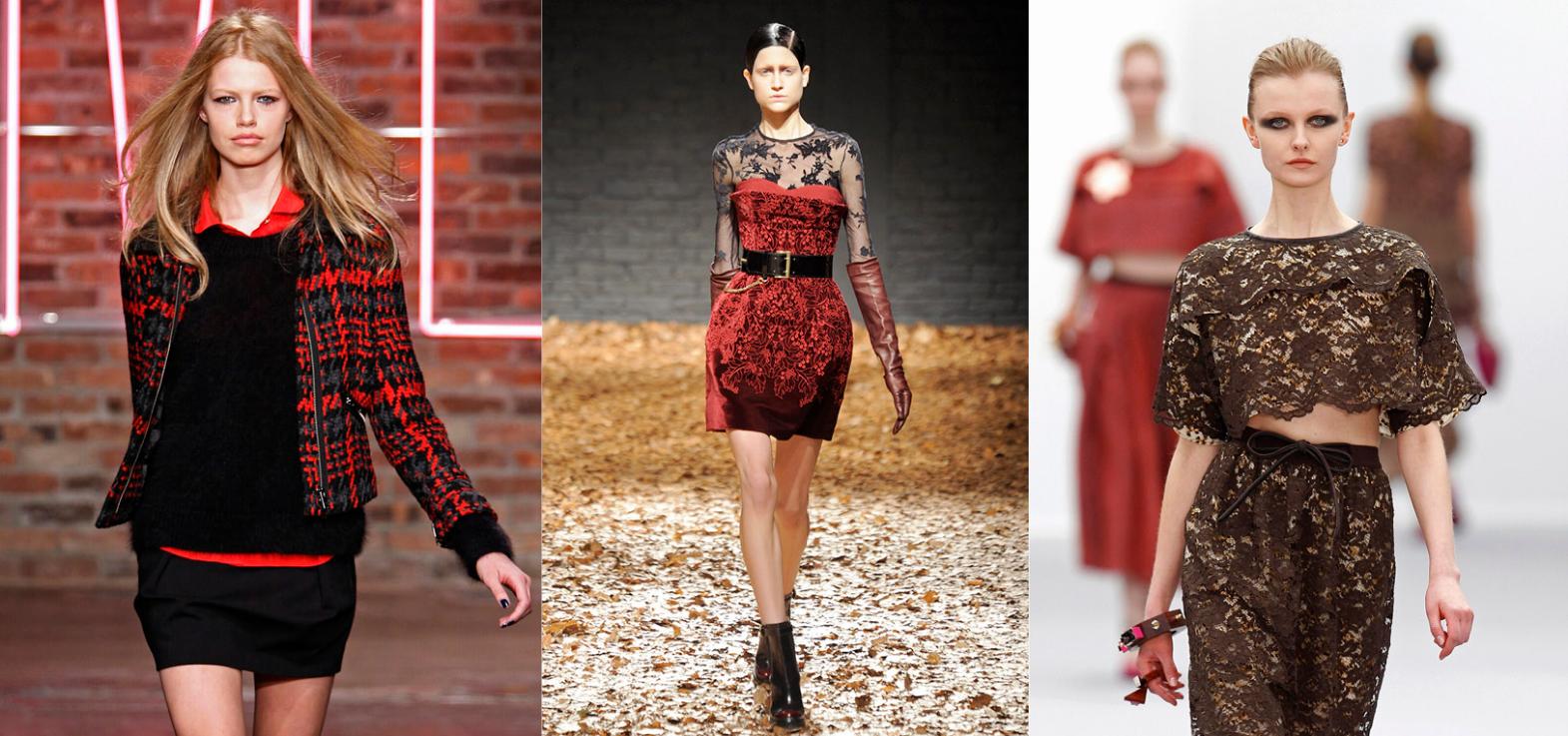
The featured image shows (l-r): DKNY Fall 2021, McQ Fall 2012, Just Cavalli Fall 2011. All photos from NowFashion.com.
- - - Advertisement - - -
What Are Diffusion Labels in Fashion?
What defines a diffusion label?
![Y-3 Spring 2025 Menswear [Paris] Creative Direction: Yohji Yamamoto; Photo: NowFashion.com](https://www.thefashionfold.com/wp-content/uploads/2025/05/diffusion-labels-01-y-3-spring-2025-menswear-credit-nowfashion.jpg)
Y-3 Spring 2025 Menswear [Paris] Creative Direction: Yohji Yamamoto; Photo: NowFashion.com
A diffusion label is a secondary, lower-priced line created by a luxury designer or fashion house. These lines are positioned below the mainline collection in both pricing and exclusivity, but carry the same brand DNA and name recognition. Some were created especially to be sold in department stores, such as American Living by Ralph Lauren (2008-2012) made for JCPenney, while others came about as collaborations, including the Yohji Yamamoto x adidas brand Y-3 (2003-today), and Polo Western (1979-2012) which saw Ralph Lauren’s designs manufactured by GAP.
![Marc by Marc Jacobs Spring 2015 [New York] Creative Direction: Luella Bartley and Katie Hillier; Photo: NowFashion.com](https://www.thefashionfold.com/wp-content/uploads/2025/05/diffusion-labels-21-marc-by-marc-jacobs-spring-2015.jpg)
Marc by Marc Jacobs Spring 2015 [New York] Creative Direction: Luella Bartley and Katie Hillier; Photo: NowFashion.com
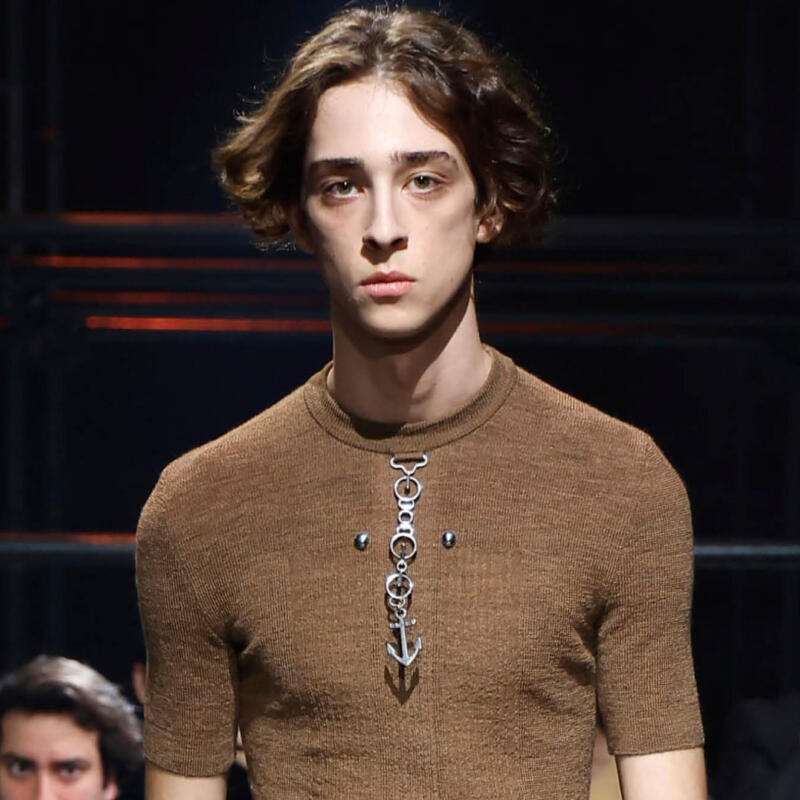
Others were aimed at a younger target market than the mainline, like Marc by Marc Jacobs (2001-2015), See by Chloé (2001-2005) and REDValentino (2003-2022). BLACK Comme des Garçons was launched in 2008 specifically taking into consideration the financial crisis at the time, to offer a more affordable line to consumers.
The Y2K era can be considered the golden period of diffusion labels, with multiple brands creating one or more diffusion lines in the late 90s to early 2010s, though many were discontinued by the mid-2020s.
Which brands have launched diffusion labels?
![Versus Versace Spring 2018 [London] Creative Direction: Donatella Versace; Photo: NowFashion.com](https://www.thefashionfold.com/wp-content/uploads/2025/05/diffusion-labels-02-versus-spring-2018-credit-nowfashion.jpg)
Versus Versace Spring 2018 [London] Creative Direction: Donatella Versace; Photo: NowFashion.com
Notable examples (other than those mentioned above) include Versus Versace (1989-2005, 2009-2018), Just Cavalli from Roberto Cavalli (1998-2018, 2022-today), and Armani Exchange by Giorgio Armani (1991-today). Some, like Emporio Armani from Giorgio Armani (launched 1981) and DRKSHDW from Rick Owens (launched 2005) have remained in circulation.
![Miu Miu Spring 2025 [Paris] Creative Direction: Miuccia Prada; Photo: NowFashion.com](https://www.thefashionfold.com/wp-content/uploads/2025/05/diffusion-labels-03-miu-miu-spring-2025-credit-nowfashion.jpg)
Miu Miu Spring 2025 [Paris] Creative Direction: Miuccia Prada; Photo: NowFashion.com
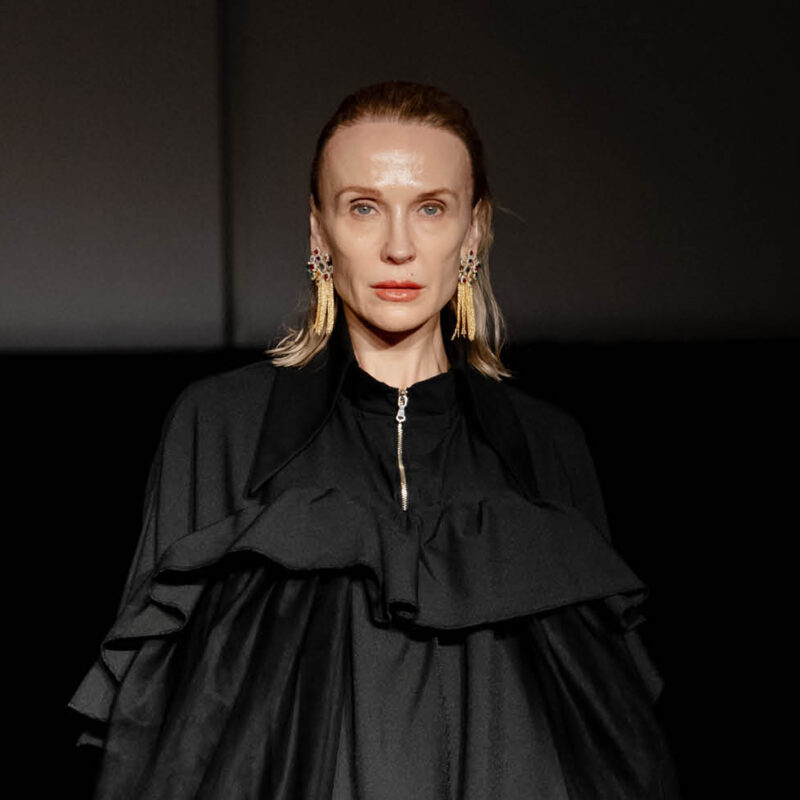
Others like Miu Miu (launched in 1993 as an offshoot of Prada) and MM6 Maison Margiela (launched in 1997 as a diffusion line of Maison Margiela) evolved from diffusion labels into standalone entities.
Some are discontinued then revived: Versace Jeans existed from the early 1990s up until 2011, and was then revived as Versace Jeans Couture in 2018.
![Moschino Cheap and Chic Spring 2012 [Milan] Creative Direction: Rossella Jardini; Photo: NowFashion.com](https://www.thefashionfold.com/wp-content/uploads/2025/05/diffusion-labels-04-moschino-cheap-and-chic-spring-2012-credit-nowfashion.jpg)
Moschino Cheap and Chic Spring 2012 [Milan] Creative Direction: Rossella Jardini; Photo: NowFashion.com
Others got renamed and/or rebranded – Moschino Jeans was launched in 1986 but in 2008 was rebranded as Love Moschino; Cheap and Chic, also from Moschino ran from 1998-2014 when it became Boutique Moschino, discontinued in 2023.
- - - Advertisement - - -
When Were Diffusion Labels Most Popular?
What was the golden era of diffusion lines?
![DKNY Fall 2011 [New York] Creative Direction: Donna Karan; Photo: NowFashion.com](https://www.thefashionfold.com/wp-content/uploads/2025/05/diffusion-labels-05-dkny-fall-2011-credit-nowfashion.jpg)
DKNY Fall 2011 [New York] Creative Direction: Donna Karan; Photo: NowFashion.com
During the Y2K era – and up to 2014 – diffusion lines thrived. They offered trend-forward pieces at accessible price points, often positioned for department stores and aspirational shoppers. This boom was no coincidence when considering the price point of diffusion labels, and therefore, their economic aspect.
After global financial instability in 1998, the dot-com bubble burst in 2000. Between 2007 and 2009, the Great Recession occurred, including the 2008 global financial crisis. 2012 was also a tough year, with the US debt-to-GDP ratio reaching 100%, and GDP growth in China slowing down.
With consumers having less disposable income for mainline prices, diffusion labels filled the gap for the aspirational consumer, and for the shopper who still wanted trend-forward pieces at a more affordable price.
Which diffusion lines defined this era?
![Comme des Garçons Homme Plus Fall 2025 Menswear [Paris] Creative Direction: Rei Kawakubo; Photo: NowFashion.com](https://www.thefashionfold.com/wp-content/uploads/2025/05/diffusion-labels-06-comme-des-garcons-fall-2025-menswear-credit-nowfashion.jpg)
Comme des Garçons Homme Plus Fall 2025 Menswear [Paris] Creative Direction: Rei Kawakubo; Photo: NowFashion.com
Looking back, ten notable diffusion labels from 1998-2014 are See by Chloé, REDValentino, Just Cavalli, Elizabeth + James, McQ, D&G, Z Zegna, M Missoni, Comme des Garçons Homme Plus, and Giamba.
In recent years, brands like VTMNTS by Vetements (2021) and Heaven by Marc Jacobs (2020) suggest the model may be making a quiet return.
However of the ten notable brands mentioned, only two are still in production: Just Cavalli and Comme des Garçons Homme Plus.
- - - Advertisement - - -
Why Did Diffusion Lines Exist in the First Place?
What business problems did diffusion lines solve?
![MM6 Maison Margiela Fall 2025 Menswear [Florence] Creative Direction: Heikki Salonen; Photo: Giovanni Giannoni](https://www.thefashionfold.com/wp-content/uploads/2025/05/diffusion-labels-07-mm6-maison-margiela-fall-2025-menswear-credit-giovanni-giannoni.jpg)
MM6 Maison Margiela Fall 2025 Menswear [Florence] Creative Direction: Heikki Salonen; Photo: Giovanni Giannoni
Diffusion lines captured the aspirational consumer who admired the designer and/or brand but couldn’t afford mainline prices. The diffusion lines expanded brand reach, built awareness, and generated volume sales.
While the mainline could target wealthier customers, the brand could still produce items for the aspirational shopper who was priced out of the mainline but still wanted to feel part of the brand as a whole.
There was no need to offer less expensive fashion within the mainline that would ‘cheapen’ the brand in the eyes of its wealthier consumers, but revenue could still be gained from generating sales with aspirational consumers.
Who were diffusion lines targeting?
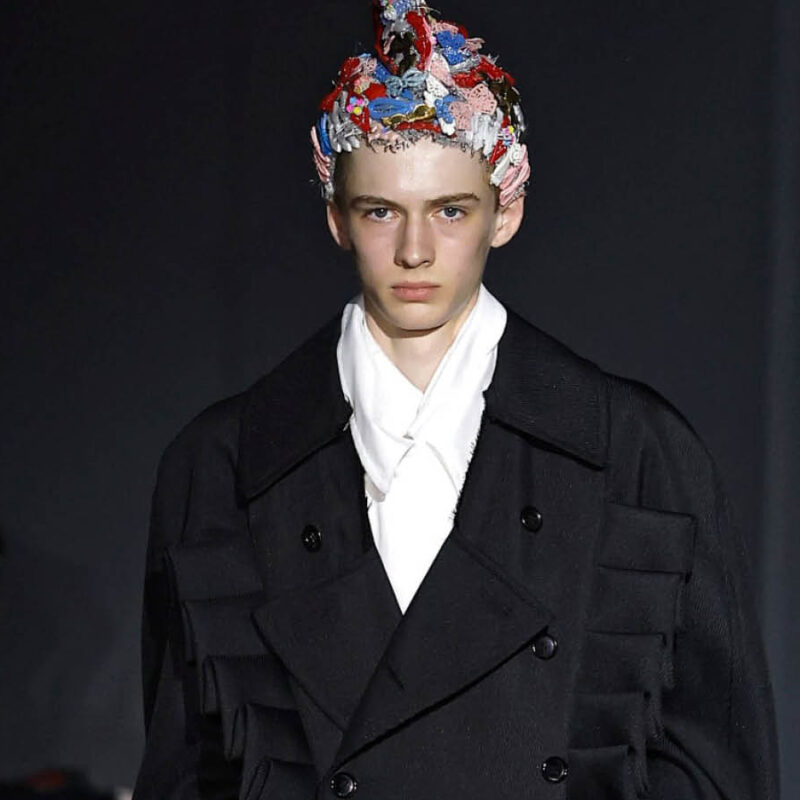
Diffusion lines were primarily targeting younger audiences, emerging markets, and fashion-conscious consumers seeking entry-level luxury. They served as a gateway into the brand’s world. The items manufactured by diffusion brands reflected this target market with the majority of them creating pieces that were edgier, more youthful, and often featured more conspicuous branding and logos. Consider the differences between D&G vs Dolce&Gabbana where the diffusion label is more colorful and casual, and Just Cavalli vs Roberto Cavalli, where the diffusion label is a more youthful version of the mainline. The complexity of designs was also different – see McQ vs mainline Alexander McQueen, although in this case the diffusion line still featured some intricate work.
![D&G Spring 2012 Menswear [Milan] Creative Direction: Domenico Dolce and Stefano Gabbana; Photo: NowFashion.com](https://www.thefashionfold.com/wp-content/uploads/2025/05/diffusion-labels-08-d-and-g-spring-2012-menswear-credit-nowfashion.jpg)
D&G Spring 2012 Menswear [Milan] Creative Direction: Domenico Dolce and Stefano Gabbana; Photo: NowFashion.com
![Dolce&Gabbana Spring 2012 Menswear [Milan] Creative Direction: Domenico Dolce and Stefano Gabbana; Photo: NowFashion.com](https://www.thefashionfold.com/wp-content/uploads/2025/05/diffusion-labels-09-dolce-and-gabbana-spring-2012-menswear-credit-nowfashion.jpg)
Dolce&Gabbana Spring 2012 Menswear [Milan] Creative Direction: Domenico Dolce and Stefano Gabbana; Photo: NowFashion.com
![Just Cavalli Fall 2011 [Milan] Creative Direction: Roberto Cavalli and Eva Cavalli; Photo: NowFashion.com](https://www.thefashionfold.com/wp-content/uploads/2025/05/diffusion-labels-10-just-cavalli-fall-2011-credit-nowfashion.jpg)
Just Cavalli Fall 2011 [Milan] Creative Direction: Roberto Cavalli and Eva Cavalli; Photo: NowFashion.com
![Roberto Cavalli Fall 2011 [Milan] Creative Direction: Roberto Cavalli and Eva Cavalli; Photo: NowFashion.com](https://www.thefashionfold.com/wp-content/uploads/2025/05/diffusion-labels-11-roberto-cavalli-fall-2011-credit-nowfashion.jpg)
Roberto Cavalli Fall 2011 [Milan] Creative Direction: Roberto Cavalli and Eva Cavalli; Photo: NowFashion.com
![McQ Fall 2012 [London] Creative Direction: Sarah Burton; Photo: NowFashion.com](https://www.thefashionfold.com/wp-content/uploads/2025/05/diffusion-labels-12-mcq-fall-2012-credit-nowfashion.jpg)
McQ Fall 2012 [London] Creative Direction: Sarah Burton; Photo: NowFashion.com
![Alexander McQueen Fall 2012 [Paris] Creative Direction: Sarah Burton; Photo: NowFashion.com](https://www.thefashionfold.com/wp-content/uploads/2025/05/diffusion-labels-13-alexander-mcqueen-fall-2012-credit-nowfashion.jpg)
Alexander McQueen Fall 2012 [Paris] Creative Direction: Sarah Burton; Photo: NowFashion.com
- - - Advertisement - - -
Why Did Diffusion Labels Fade Out?
What role did fast fashion play in the death of diffusion labels?
![Z Zegna Spring 2014 Menswear [Milan] Creative Direction: Paul Surridge; Photo: NowFashion.com](https://www.thefashionfold.com/wp-content/uploads/2025/05/diffusion-labels-14-z-zegna-spring-2014-menswear-credit-nowfashion.jpg)
Z Zegna Spring 2014 Menswear [Milan] Creative Direction: Paul Surridge; Photo: NowFashion.com
Fast fashion brands like Zara dramatically improved production speed, often delivering runway-inspired pieces within weeks. Consumers looking for trends at affordable prices could turn to the high street instead.
With runway collections increasingly being available online, and trend forecasting and reporting services available to fast fashion retailers, it became much easier to know trends and plan to have them in stores as soon as possible. It became possible for consumers to see fashion on the runway then go to a fast fashion retailer and purchase a piece that looked almost identical to its runway counterpart.
How did luxury brands shift their strategy?
Many pivoted toward exclusivity, focusing on direct-to-consumer sales and tightening their creative vision. Brand dilution became a growing concern, as secondary lines often lacked the sharp direction of their mainline counterparts. Diffusion labels were often phased out slowly or absorbed into the mainline.
What retail shifts impacted diffusion labels?
![Chanel Fall 2025 [Paris] Creative Direction: Design Team; Photo: NowFashion.com](https://www.thefashionfold.com/wp-content/uploads/2025/05/diffusion-labels-15-chanel-fall-2025-credit-nowfashion.jpg)
Chanel Fall 2025 [Paris] Creative Direction: Design Team; Photo: NowFashion.com
The collapse of department stores like Barneys (closed in 2020) and Colette (closed in 2017) removed key distribution channels for diffusion lines. Losing these key parts of the DTC strategy contributed to many diffusion labels being phased out.
Another retail shift was the rise of e-commerce. Many luxury labels were slow to start selling online (Chanel, notably, still do not sell fashion online, only beauty) and this significantly impacted the survival of diffusion labels. As shopping rapidly shifted online, fast fashion and digital-native brands filled the gap with speed, trend focus, and aggressive pricing.
Diffusion labels, lacking digital visibility, quickly lost relevance. With luxury brands hesitant to invest in e-commerce or support their lower-priced lines online, diffusion labels became buried, diluted, or disappeared altogether – unable to compete in the new digital landscape. These logistical reasons contributed to the death of the diffusion line.
- - - Advertisement - - -
What Economic and Cultural Trends Mirror the Past?
Are Gen Z consumers interested in luxury?
![Ichi Fall 2025 [New York] Creative Direction: Hanako Maeda; Photo: Seiji Fujimori / ADEAM](https://www.thefashionfold.com/wp-content/uploads/2025/05/diffusion-labels-17-ichi-fall-2025-credit-seiji-fujimori-for-adeam.jpg)
Ichi Fall 2025 [New York] Creative Direction: Hanako Maeda; Photo: Seiji Fujimori / ADEAM
While Gen Z consumers are interested in luxury, they are often priced out of it. Gen Z seeks brand alignment and authenticity, but the rising cost of luxury fashion makes mainline purchases unrealistic for many. Millennials too are finding themselves cutting back on spending.
As noted in this article, Gucci’s strategy to bring back the aspirational shopper seems to have been to bring on Demna Gvasalia, a designer adept at creating pieces for the aspirational consumer.
For other brands, the strategy is the introduction of diffusion lines – Luar introduced Luar Basics in 2024, while Heaven by Marc Jacobs was established in 2020 and taps into the Y2K nostalgia that is trending with Gen Z.
Just Cavalli, originally established in 1998 but faltering by 2018, was relaunched for Spring 2023 as part of a multi-year license partnership with Swinger International. Hanako Maeda created her Ichi line in 2021 as a more youthful companion brand to ADEAM.
Is economic pressure making room for bridge fashion?
With inflation, tariffs, and lower disposable incomes, there’s growing demand for fashion that bridges fast fashion and luxury. This mirrors the early 2000s recessions and financial crises mentioned above, when diffusion lines thrived.
Is fast fashion losing its appeal?
Increasing scrutiny around the ethics and sustainability of fast fashion is pushing consumers toward more conscious alternatives like resale, rental, and mindful shopping. Today’s shoppers are more aware of the environmental impact of fast fashion, as well as the human cost – including underpaid labor and exploitative working conditions.
At the same time, the price of fast fashion has been steadily rising due to factors like Brexit, the Covid-19 pandemic, and recent U.S. tariffs. As a result, fast fashion is no longer the easy, budget-friendly option it once was – creating an opportunity for well-positioned diffusion labels to fill the gap.
Which current trends are reigniting interest in diffusion lines?
The quiet luxury trend has all but died, with maximalist dressing (and to a certain degree, logomania and status dressing) now becoming the goal. Aspirational consumers who are unable to afford a brand’s mainline offering are the perfect target market for a diffusion line.
- - - Advertisement - - -
Are Diffusion Lines Already Coming Back?
Are we seeing modern diffusion strategies already?
![VTMNTS Fall 2022 [Paris] Creative Direction: Guram Gvasalia; Photo: NowFashion.com](https://www.thefashionfold.com/wp-content/uploads/2025/05/diffusion-labels-18-vtmnts-fall-2022-credit-nowfashion.jpg)
VTMNTS Fall 2022 [Paris] Creative Direction: Guram Gvasalia; Photo: NowFashion.com
Yes, though they may not always be called that outright. Brands like JW Anderson x Uniqlo, H&M x Designers, and COS x Designers operate with similar DNA: lower price point, broad accessibility, and strong branding.
Some true diffusion labels have been established in the past five years: Bode Rec by Bode (2024), Luar Basics by Luar (2024), No Problemo by Aries (2024), Ichi by ADEAM (2021), VTMNTS by Vetements (2021), and Heaven by Marc Jacobs (2020) – though many other diffusion lines have also been discontinued in that same time frame: See by Chloé (2025), More Joy by Christopher Kane (2023), Victoria Victoria Beckham (2022), McQ by Alexander McQueen (2022), REDValentino (2022), Z Zegna (2021), M Missoni (2021), E.Z. by Zegna (2021), and Tricot Comme des Garçons (2020).
Do collaborations count as diffusion labels?
In many cases, yes. H&M’s designer collaborations function like limited-time diffusion lines – offering brand cachet at high-street prices. They offer aspirational shoppers a means of buying into luxury brands without paying mainline prices, mirroring the function of classic diffusion lines.
- - - Advertisement - - -
Should Fashion Brands Bring Back Diffusion Labels?
What are the benefits of bringing back diffusion labels?
![Emporio Armani Fall 2025 Menswear [Milan] Creative Direction: Giorgio Armani; Photo: NowFashion.com](https://www.thefashionfold.com/wp-content/uploads/2025/05/diffusion-labels-16-emporio-armani-fall-2025-menswear-credit-nowfashion.jpg)
Emporio Armani Fall 2025 Menswear [Milan] Creative Direction: Giorgio Armani; Photo: NowFashion.com
The benefits of reintroducing diffusion labels are:
- Capturing aspirational shoppers
- Offsetting financial losses without lowering mainline prices
- Tapping into nostalgic Y2K energy
- Responding to the economic reality of reduced consumer spending
- Offering a more sustainable alternative to fast fashion
What are the risks of diffusion labels?
![Giamba Spring 2016 [Milan] Creative Direction: Giambattista Valli; Photo: NowFashion.com](https://www.thefashionfold.com/wp-content/uploads/2025/05/diffusion-labels-19-giamba-spring-2016-credit-nowfashion.jpg)
Giamba Spring 2016 [Milan] Creative Direction: Giambattista Valli; Photo: NowFashion.com
Diffusion labels do not come without their risks, and the reasons below contributed to their being discontinued and/or absorbed into the mainline:
- Brand dilution
- Market saturation
- Mainline customers trading down
Is there space in today’s market to bring back the diffusion line?
Yes. The once-thriving “bridge” segment between fast fashion and high luxury is opening again. With fast fashion facing rising costs and sustainability backlash, diffusion labels can reclaim relevance – if done thoughtfully.
- - - Advertisement - - -
Final Thoughts: Is Now the Right Time for a Comeback?
![McQ Fall 2012 [London] Creative Direction: Sarah Burton; Photo: NowFashion.com](https://www.thefashionfold.com/wp-content/uploads/2025/05/diffusion-labels-20-mcq-fall-2012-credit-nowfashion.jpg)
McQ Fall 2012 [London] Creative Direction: Sarah Burton; Photo: NowFashion.com
We are in an economic climate where full-price luxury is out of reach for many, and fast fashion is losing its cultural capital. Brands like Elizabeth + James and McQ succeeded in a similar landscape 10-15 years ago, offering trend-forward, accessible design. With Gen Z and Millennials looking for value, identity, and sustainability, the diffusion model – updated for today’s direct-to-consumer, digital-savvy world – may be exactly what the market needs.
The timing is right. The demand is real. The opportunity is open. The question is: who will take it?
- - - Advertisement - - -

London College of Fashion alumna (PGCert Fashion Buying & Merchandising). 15 years in fashion across styling, buying & merchandising, trend forecasting, e-commerce, and marketing. Includes roles at Vivienne Westwood and multi-brand retail stocking 50+ brands including Adidas, Nike, and Puma.