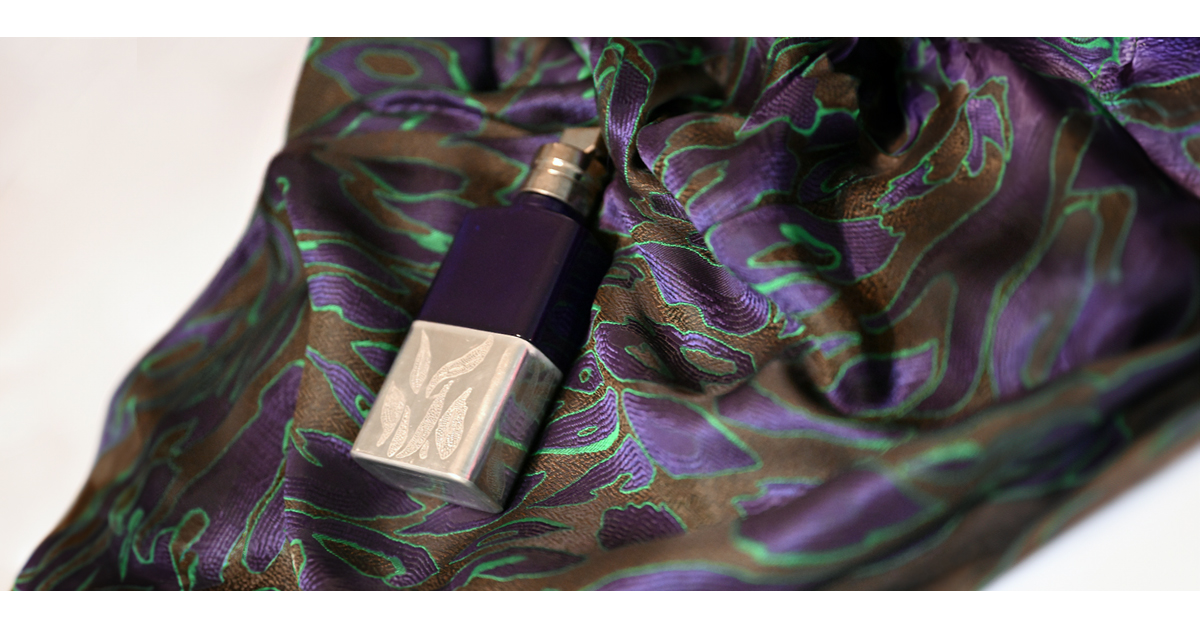
Did you know there was a shade of green that killed people? Back in 1775, Swedish scientist Carl Wilhelm Scheele invented a shade of green which came to be known as Scheele’s Green. The color is a yellowish-green pigment and it became very popular in the early to mid-19th Century as a paint for artists and also to dye products like fabrics, wallpaper, book bindings, candles, and children’s toys.
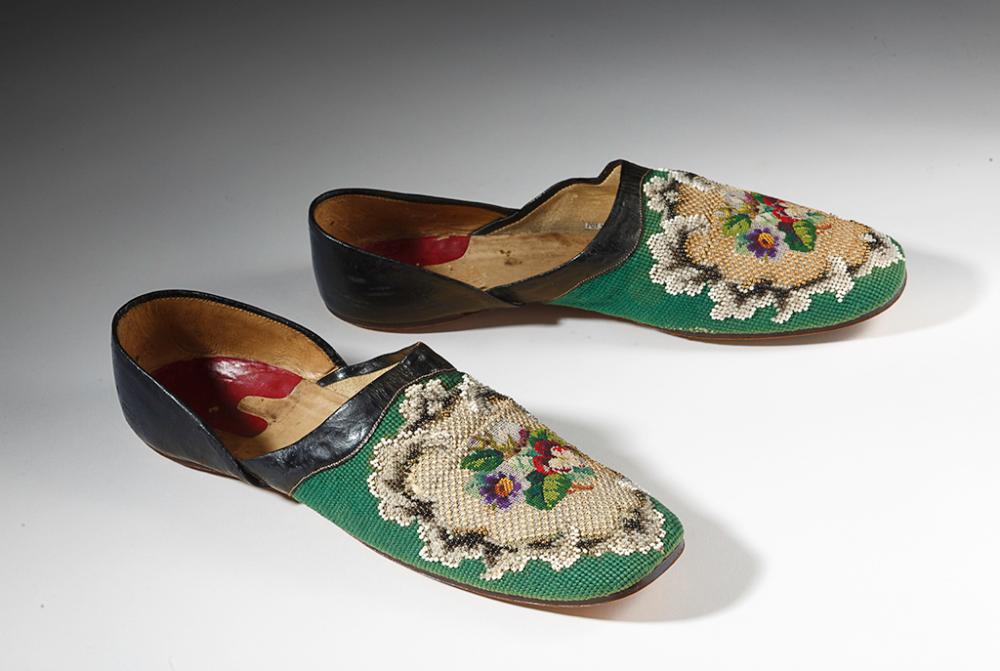
Shoes from England, c.1860s. Source: Bata Shoe Museum
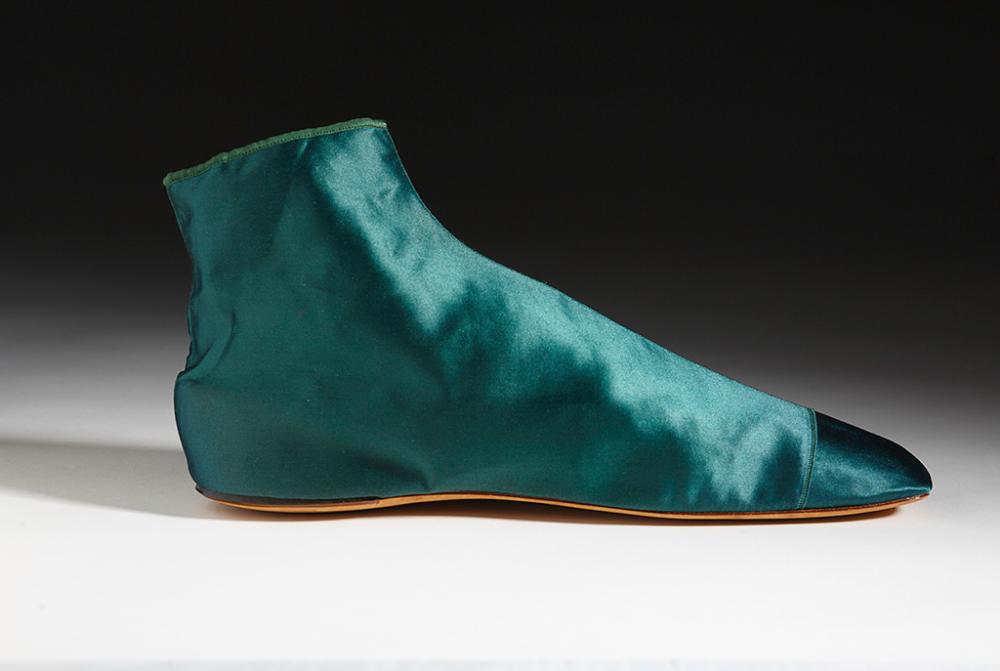
Shoes from Europe, c.1840s. Source. Bata Shoe Museum
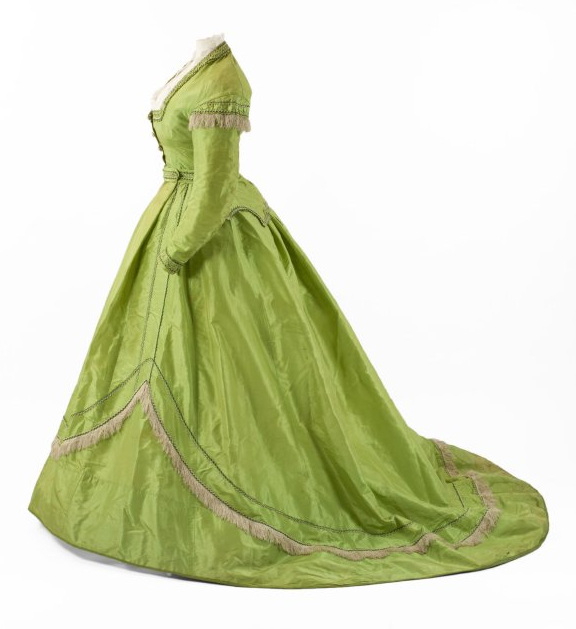
Apple green silk 3-piece dress with train and overskirt, c.1865-68. Source: Fashion Research Collection
- - - Advertisement - - -
Why was Scheele’s Green so toxic?
Scheele’s Green (also called Schloss Green) was made using chemicals including Copper, Sodium Carbonate and Arsenious Oxide – the latter contained Arsenic which is not just toxic but also carcinogenic. In the 19th Century, knowledge about Arsenic’s toxicity was not widespread, and there were reports of children wasting away in their bedrooms painted bright green, women fainting while wearing green dresses, and people being poisoned while burning green candles. Scheele’s Green is even implicated in the death of Napoleon (more about that later).
Even though knowledge of Arsenic’s toxicity began to spread, Scheele’s Green continued to be used, with textile designer William Morris denying the dangers of the pigment. There was no safe alternative for a bright green at the time, and he continued to use Scheele’s Green in his wallpapers and rugs.
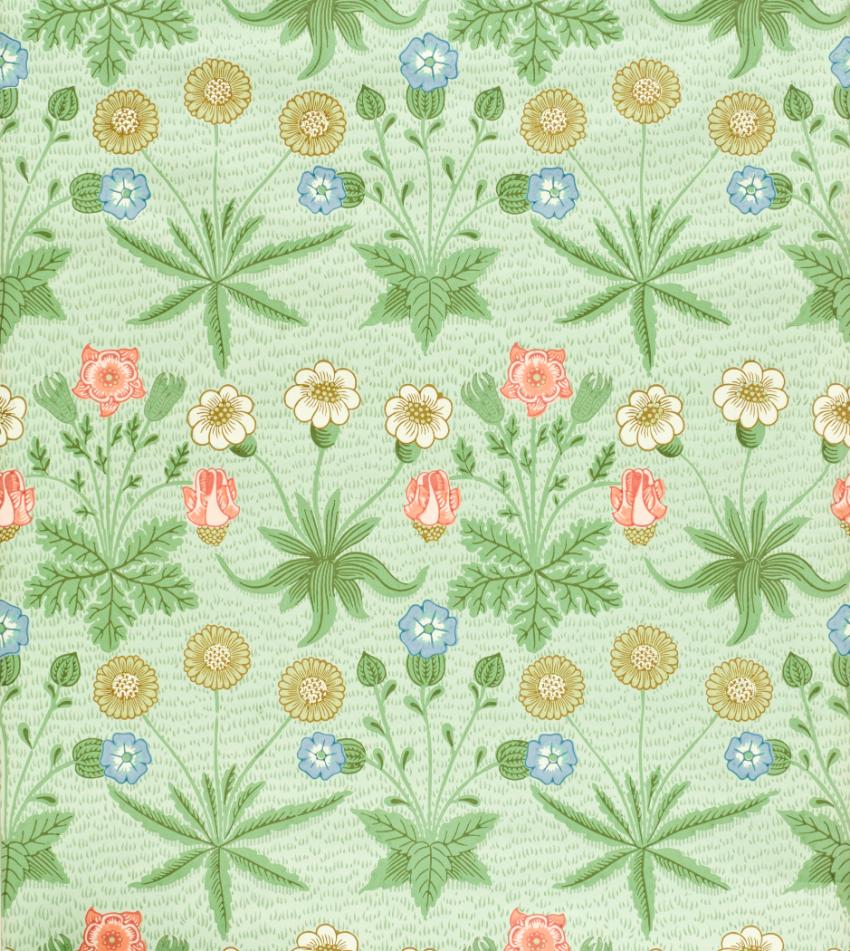
Wallpaper by Morris & Co, 1864. Source: The Paris Review
- - - Advertisement - - -
When was Scheele’s Green banned?
Pigments containing Arsenic started to be banned in Europe in the 1830s and 1840s, but Scheele’s green continued to be used even in the 1860s. By the 1890s, the last brand of wallpaper using Scheele’s Green had stopped production.
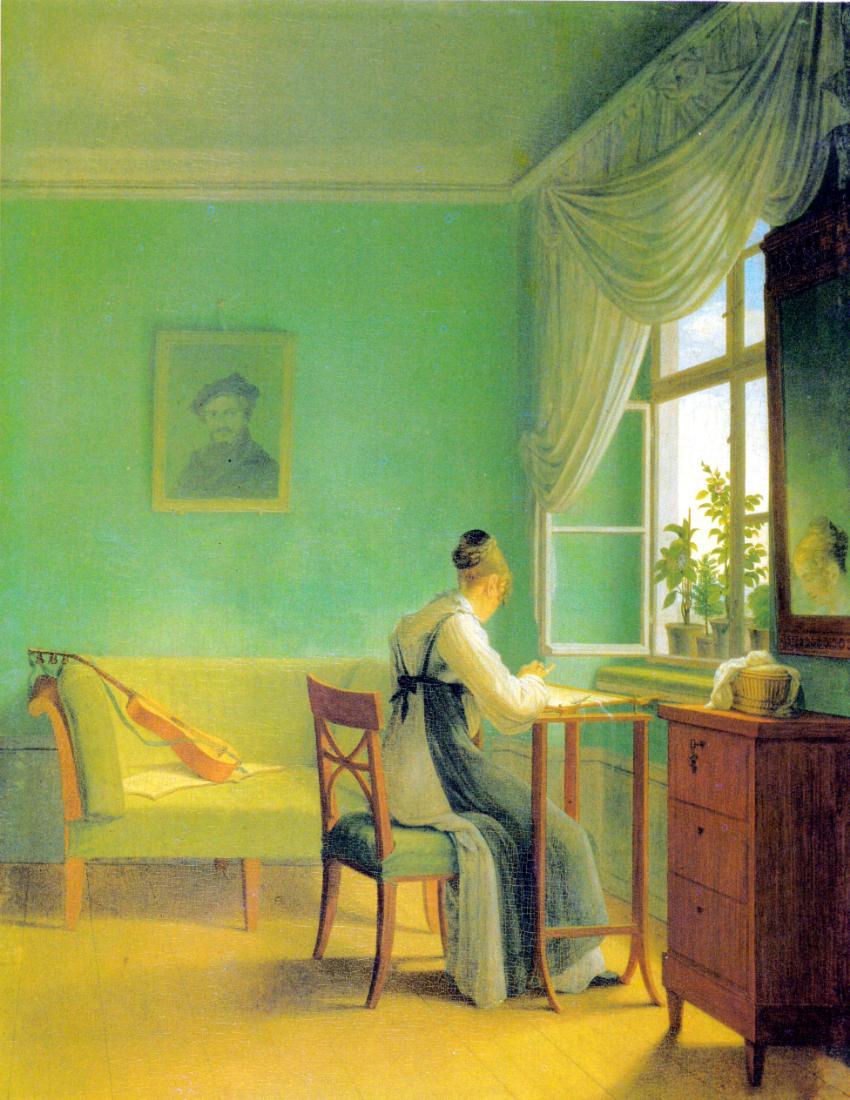
Georg Friedrich Kersting, Die Stickerin (The Embroiderer), 1827. Source: Wikimedia Commons
Certain incidents that gained widespread publicity helped the ban: In 1858, 21 people died from eating hard candies that had been colored with an Arsenic green. In 1861, 19-year old Matilda Scheueur died as a result of her job involving the pigment, and an article was published that also showed autopsy findings of eyes and fingernails that had turned green.
- - - Advertisement - - -
How did Scheele’s Green kill people?
Arsenic can be released by fabrics and papers dyed with Scheele’s Green for a number of reasons – tiny particles can flake off, heat can release toxic gas particles, damp can release poisonous Arsine gas.

Emerald green bookcloth on an 1852 imprint, Tallis’s The Crystal Palace. Courtesy, Winterthur Library, Printed Book and Periodical Collection. Source: University of Delaware, Poison Book Project
Fungus can also release Arsine gas when growing on a substance containing Arsenic, so houses containing damp and using Arsenic-based paint or wallpaper would be even more susceptible.
- - - Advertisement - - -
Was Napoleon killed by Scheele’s Green?
Some historians believe that the death of Napoleon can also be traced to Scheele’s Green – during his exile on St. Helena, he lived in a house in which the room were painted bright green, his favorite color. It is widely believed that his death was caused by stomach cancer – as mentioned above Arsenic is a carcinogen – and an analysis of his hair has revealed high amounts of Arsenic. With the damp climate of St. Helena, fungus likely grew on the walls; this fungus would have sped up the process of releasing Arsine gas from the paint.
- - - Advertisement - - -
What alternatives existed?
 Self Portrait (dedicated to Paul Gauguin), 1888. Source: Wikimedia Commons” width=”330″ height=”403″>
Vincent van Gogh, Self Portrait (dedicated to Paul Gauguin), 1888. Source: Wikimedia Commons
Scheele’s Green wasn’t the only green pigment made with Arsenic compounds – there was also Paris Green, manufactured in 1814 to make a bright and vibrant green, used by many 19th Century artists including Vincent van Gogh.
In 1867, farmers in Illinois and Indiana discovered that Paris Green made a great insecticide, and it was also used to kill rats in the sewers of Paris, which is how it got its name.
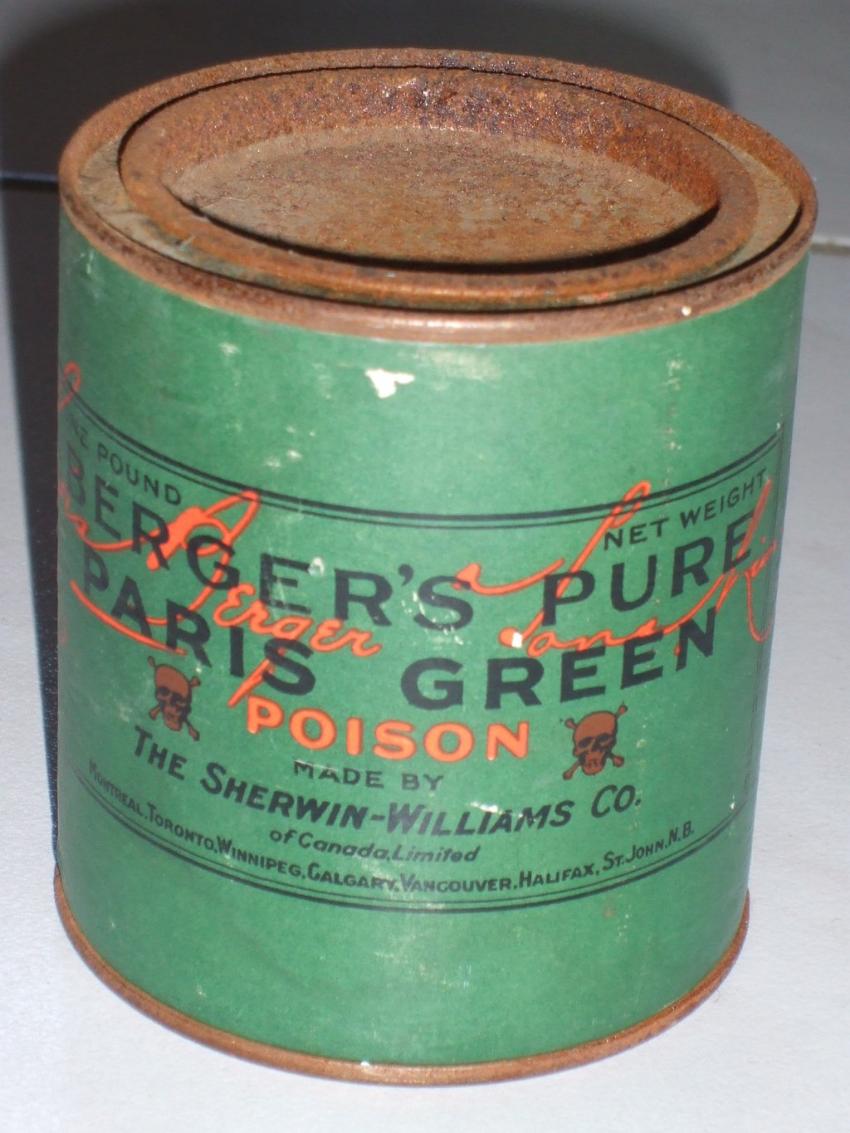
A bucket of Paris Green paint by The Sherwin-Williams Co., photo by Chris Goulet. Source: Wikimedia Commons

“Dust Paris green on swamps and ponds.” U.S. National Archives and Records Administration. Source: Wikimedia Commons
- - - Advertisement - - -
Are today’s greens safe?
Today’s greens are still quite complicated: they often use Chlorine which can’t be recycled or safely composted. Some commercial green pigments also contain metals including Cobalt – exposure to Cobalt dust can cause irritation to the skin, nose, eyes and throat.
- - - Affiliate Advertisement - - -
In the end, the story of Scheele’s Green is a vivid reminder that beauty has often come at a deadly cost. What was once seen as elegant, fashionable, and desirable turned out to be insidiously toxic – literally seeping into homes, clothes, and lives with devastating consequences. Today, while we no longer line our walls with arsenic-laced wallpaper, the legacy of deadly pigments lingers in the complex chemistry behind modern colors. Green, it seems, has always had a dark side – and we’re still learning how to live with it.

London College of Fashion alumna (PGCert Fashion Buying & Merchandising). 15 years in fashion across styling, buying & merchandising, trend forecasting, e-commerce, and marketing. Includes roles at Vivienne Westwood and multi-brand retail stocking 50+ brands including Adidas, Nike, and Puma.