
Fashion history is more than a timeline of changing trends, but it affects culture, politics, and economics. This exploration of news from one year ago to 250 years ago (all in January) shows how much things have changed in fashion history over the years, from digitalisation in the last 10 years to descriptions of elaborate head dresses worn in 1776.
1926 sees London challenging Paris’s fashion supremacy, while there is criticism of impractical footwear in 1826, and debates about the ‘frivolity’ of fashion in 1876 – some things in fashion history never change!
21st Century Fashion History
1 Year Ago: January 2025
The year started with tragic news: a fire ripped through Ghana’s Kantamanto used clothing market on New Year’s Day, destroying over 100 shops. The market in the Ghanaian capital of Accra, an important part of the global secondhand clothes trade, was mostly destroyed.
Italian photographer Oliviero Toscani – best known for his work on 1980s-90s Benetton ad campaigns – passed away; he had served as Art Director the brand.
There were also rumours that Jil Sander was to hire Daniel Lee as Creative Director, but this never did come to pass, while Stella McCartney bought back her stake from LVMH.
Embed from Getty Images
Before the Fire: Kantamanto textile market, Accra, Ghana, Friday, Sept. 16, 2022. Photographer: Andrew Caballero-Reynolds/Bloomberg via Getty Images
5 Years Ago: January 2021
During the Covid-19 pandemic and Brexit era, January in the fashion industry – I’m focusing on the UK here – was a time of unprecedented challenges.
I was in the thick of it as the UK entered its third national lockdown on January 6th. Working at Vivienne Westwood, I was part of our rapid pivot to online-only as physical stores closed. With no clear government guidance, we (and all other retailers) had to develop agile strategies to move stock from shuttered shops to e-commerce, while knowing that the government could announce the end of the lockdown with a day or two’s notice.
Brexit also dominated the headlines – I remember the sudden and significant delivery delays for stock manufactured in the EU, and not only were they delayed, but they were also much more expensive now.
Owing to all the turbulence at the time, the retail landscape dramatically shifted, with iconic brands like Debenhams and Arcadia (owners of TopShop) leaving the high street.
Embed from Getty Images
High Street Collapse: Debenhams, Sheffield, May 5, 2021 (Photo by Mike Egerton/PA Images via Getty Images)
In international news, Priya Elan wrote in The Guardian on the 29th about fashion label Vetements drawing criticism for clothes featuring a blue spray effect. Guram Gvasalia (Vetements’ Chief Executive at the time) said this was a reference to the Hong Kong protests where police fired water with blue dye onto protesters; said blue dye would allow them to identify protesters after the fact.
Embed from Getty Images
Solidarity or Opportunism? A water cannon sprays blue dye during a protest that defied a police ban on mass rally. Sunday, Sept. 15, 2019. Photographer: Kyle Lam/Bloomberg via Getty Images
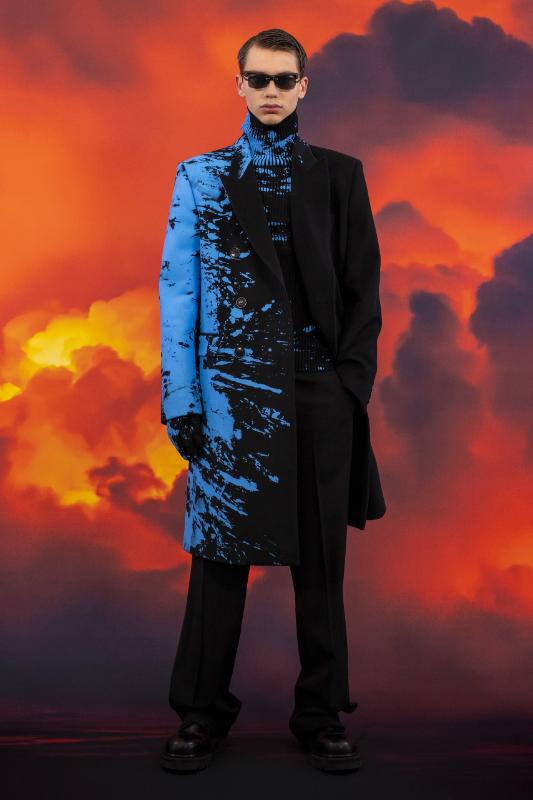
Vetements Fall 2021 Menswear
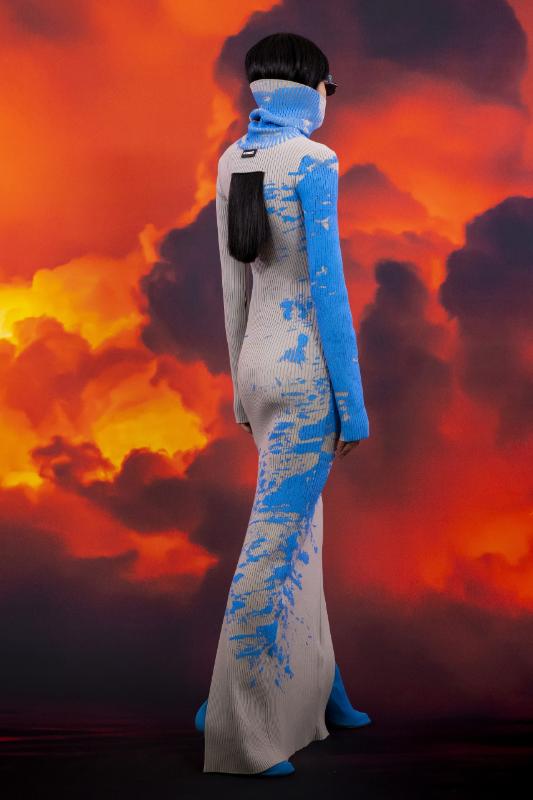
Vetements Fall 2021 Menswear
10 Years Ago: January 2016
On January 11, Burberry launched an Apple TV channel, which they celebrated by livestreaming their Fall 2016 Menswear show – making fashion history by being the luxury label to broadcast a fashion show in real time on the app.
Louis Vuitton sued three people selling counterfeit goods on Taobao, while Stella McCartney presented the brand’s Fall 2016 collection in Hollywood’s Amoeba music store, with models dancing amidst the records and CDs. The presentation included performances by Dirty Dozen, Pink, and other musicians.
Embed from Getty Images
Fashion x Music: Dirty Dozen perform at the Stella McCartney Autumn 2016 presentation at Amoeba Music. January 12, 2016, Hollywood, California. (Photo by MJ Kim/Getty Images)
On the 19th, The Independent published an article by Alexander Fury about Kim Jones, calling him “the most important menswear designer you’ve probably never heard of,” while in the Evening Standard of the 8th, Sophia Sleigh spoke about London’s upcoming Menswear Fashion Week, noting that the city’s edition was to be more exciting than it had ever been, with labels including Alexander McQueen, Pringle of Scotland, and the aforementioned Burberry on the schedule.
15 Years ago: January 2011
Gareth Pugh presented a collection in Florence’s Orsanmichele Church during Pitti Immagine Uomo 79, while Grace Coddington stepped down as US Vogue creative director after nearly 30 years at the magazine.
The Sunday Telegraph of the 9th gave style tips according to the zodiac, including advising Virgoans to wear pleats, and Leos neon colours.
On the 15th, The Guardian‘s Imogen Fox noted that stylists were becoming more powerful in the fashion sphere, with Nicola Formichetti (Lady Gaga’s stylist at the time) about to unveil his first collection as Creative Director of Thierry Mugler.
Embed from Getty Images
Gareth Pugh at Pitti: The Gareth Pugh installation at Orsanmichele, January 13, 2011 in Florence, Italy. (Photo by Vittorio Zunino Celotto/Getty Images)
20 Years ago: January 2006
Alexander McQueen launched the diffusion label McQ; The Guardian‘s Hadley Freeman called out the fashion industry’s general practice at the time of creating such labels (characterised by lower prices and more commercial pieces) with the headline “Profit before art as designer labels launch cheaper lines“, going on to say:
“Alexander McQueen is best known for quasi-couture dresses … but yesterday he joined the growing number of designers who are launching cheaper lines – or “diffusion” to use the preferred euphemism – when he showed his new brand, McQ.”
CBSNews wrote a scathing review of the Spring 2026 couture in an article called “Fashion Faux Pas“. Two quotes below, find the rest here: CBSNews.
A model presents a creation in beat-up cowhide and plastic by British fashion designer John Galliano for Dior’s haute couture spring-summer 2006 collection presented in Paris on Monday, Jan. 23, 2006.”
“A model wears a shower curtain for Givenchy’s Riccardo Tisci during the haute couture spring-summer 2006 fashion collection presented in the Musee Bourdelle in Paris on Tuesday, Jan. 24, 2006.”
25 Years ago: January 2001
On the 31st, Florida Today reported that the previous autumn had been a bad period for the luxury online sector, while also noting that the luxury e-commerce market was not a big one, accounting for less than 1% of the US$6 billion of revenue over the holiday season. An analyst at BlueStone Capital stated at the time, “The luxury business is never going to be huge online.” However in 2025, 20% of all luxury purchases came from the internet.[1]
A January 2001 study showed that e-commerce sales in 2000 (from all sectors) nearly doubled over the previous year,[2] with about US$56 billion in sales in 2001. The article also predicted that B2C (business to consumer) e-commerce would be over US$1.1 trillion by 2010: here’s another one to fact-check. In 2010, US e-commerce sales hit US$169.1 billion,[3] so that article was a bit too optimistic – even when taking inflation into account (US$1 in 2000 = US$1.27[4] in 2010, and US$1.88[5] today.
20th Century Fashion History
50 Years Ago: January 1976
January 21st was the first flight of the Concorde, with the uniforms being designed by Jean Patou and Hardy Aimes. As noted in The Daily Telegraph by Air Cdre E. M. Donaldson on January 15th, each member of the cabin crew would be given two sets of uniforms to allow many different styling combinations.
Items included an overcoat, trousers with a slight flare, a blouse, and a safari-style skirt. Two-and-a-half-inch high court shoes were also assigned, made by Edward Rayne, (noted as the Queen’s shoemaker by the newspaper).
Embed from Getty Images
Concorde Uniforms: Models displaying designs by Hardy Amies for British Airways Concorde in London. January 14th, 1976 (Photo by PA Images via Getty Images)
In the Tyler Morning Telegraph of 28th January, Aline Mosby wrote from Paris about the latest Christian Dior collection by Marc Bohan, noting that models had “oiled, slicked back gangster hair-dos”, while wearing narrow skirts, tailored suit jackets, and elevated parkas.
75 Years Ago: January 1951
This video from the BBC Archive shows the January sales in 1951, where £6 dresses were reduced to 70 shillings. With 20 shillings in £1, and 12p in 1 shilling, this means a reduction of 42%.
An article in The Houston Chronicle, dated 21st January, by Jeanne Barnes and Berta Mohr, talks about the latest trends, noting that the 1951 lady is “neither a fluffy flapper nor a gawky tomboy”. Items mentioned include open-back necklines, styles with pale colour on top and brighter and/or deeper shades on the bottom.
Also noted are slim line suits, jackets with nipped waistlines, and rounded, slightly padded hiplines. The authors note that coats become slimmer – narrower in front but still full in the back, while dresses become more elaborate, often with a stole, button-on capelet, over-skirt, or a belt.
Embed from Getty Images
1951 Fashion:Three young women in London, 1951. (Photo by Paul Popper/Popperfoto via Getty Images/Getty Images)
100 Years ago: January 1926
On 28th January 1926, fashion history took a more dramatic turn: The Daily Telegraph featured an article with the headline: “Pageant of Fashion – The British Model House – Paris Supremacy Challenged“. The British Model House was opened, which according to The President of the Board of Trade, Sir Philip Cunliffe-Lister, was a combined effort of a number of competing firms in the textile industry to improve their standards, market their products, and subsequently increase their sales.
“…it is hoped that Britain may, eventually, be able to claim for London a veritable dictatorship of feminine fashions.”
Britain wasn’t the only place trying to knock Paris off its pedestal: a 24th January 1926 article in The Tampa Tribune by A. David Lewis with the headline “In Near Future it is Predicted Even Paris Will Turn to Sunshine State for Latest Creations in Women’s Fashions” the author noted that real estate agents have been promoting property in the state by pushing the idea that Florida is the new fashion hub, with Floridian resorts being the best place for women to “show their clothes and show themselves.”
Embed from Getty Images
Florida vs Paris: “One of the Beautiful Scenic Streets of Florida”, 1926. (Photo by Smith Collection/Gado/Getty Images)
19th Century Fashion History
150 Years ago: January 1876
An article in the New York Mercury describes the trends of the time, mentioning lace scarfs with small polka dots, silk hosiery, and coloured petticoats – some in black and white, others made of red wool trimmed with black velvet and lace.
Fur-lined cloaks are called impractical; described as too heavy, with fur-lined silk jackets being a much more functional choice.
On 22nd January, the Hull Evening News criticised fashion trends, comparing women’s style choices to sheep blindly following the flock.
“Follies of Fashion. — One can scarcely help laughing to see a whole flock of sheep jumping at a particular spot because one does so; but is there not a similar absurdity in the way that ladies, one after the other, follow the remarkable fashions of the day! They can give no reason why they do so, further than that it is the fashion. That seems to be the only argument employed. In not one instance out of a hundred can any one tell who is the leader of fashion, or the originator of any particular costume or part of it.”
Embed from Getty Images
Women’s Fashions of the 1870s: Colour plate from Journal Des Demoiselles, Paris, France, 1876. (Photo by Paul Popper/Popperfoto via Getty Images)
200 Years ago: January 1826
An article in the Pennsylvania Republican published on 31st January wrote about the “objectionable fashion of the present day” whereby women wear thin shoes that are inappropriate for the weather and bad for their health, ignoring the “danger of damp feet” and mentioning numerous cases of consumption.
18th Century Fashion History
250 Years ago: January 1776
On January 20th, the Cambridge Chronicle and Journal ran an advert asking for a “youth of a sober disposition” to work as an apprentice to a linen-draper in London, who would be instructed in both the wholesale and retail trades.
And finally, on January 19th, The Derby Mercury wrote about a celebration for the Queen’s birthday, with women wearing head dresses adorned in artificial flowers and fruits.
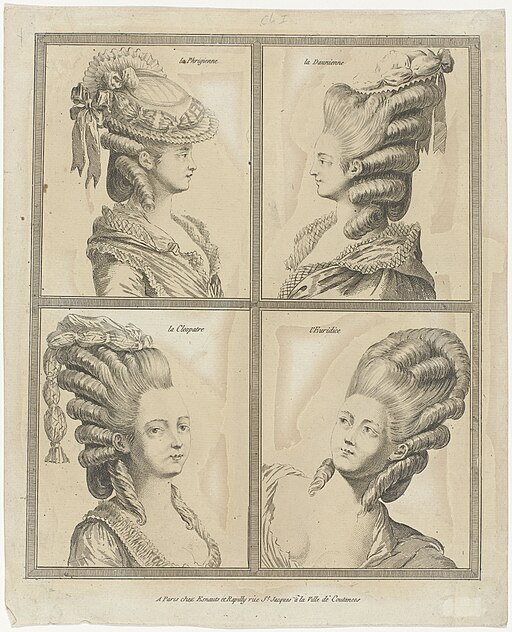 Parisian Head Dresses: Gallerie des Modes et Costumes Français (1776), Wikimedia Commons[6]
That’s all for January – there will be another set of fashion history stories from the archives next month.
Note: The featured image shows “The vis-a-vis bisected, or the ladies coop” from 1776.[7]
Reference List
[1] “The Future of Luxury Retail: 5 Trends to Stay Ahead”, Cegid, March 2025
[2] “Study: E-Commerce Nearly Doubled in 2000”, Ecommerce Times, January 2001
[3] “US Ecommerce Sales (2010 – 2020)”, NetIncubators.com, no date
[4] “$1 in 2000 is worth $1.27 in 2010”, CPI Inflation Calculator, retrieved January 10th 2025
[5] “$1 in 2000 is worth $1.88 in 2025”, CPI Inflation Calculator, retrieved January 10th 2025
[6] “Gallerie des Modes et Costumes Français” (1776), Rijksmuseum, CC0, via Wikimedia Commons
[7] “The vis-a-vis bisected, or the ladies coop” (1776) British Museum, Public domain, via Wikimedia Commons

London College of Fashion alumna (PGCert Fashion Buying & Merchandising). 15 years in fashion across styling, buying & merchandising, trend forecasting, e-commerce, and marketing. Includes roles at Vivienne Westwood and multi-brand retail stocking 50+ brands including Adidas, Nike, and Puma.

.jpg target=)