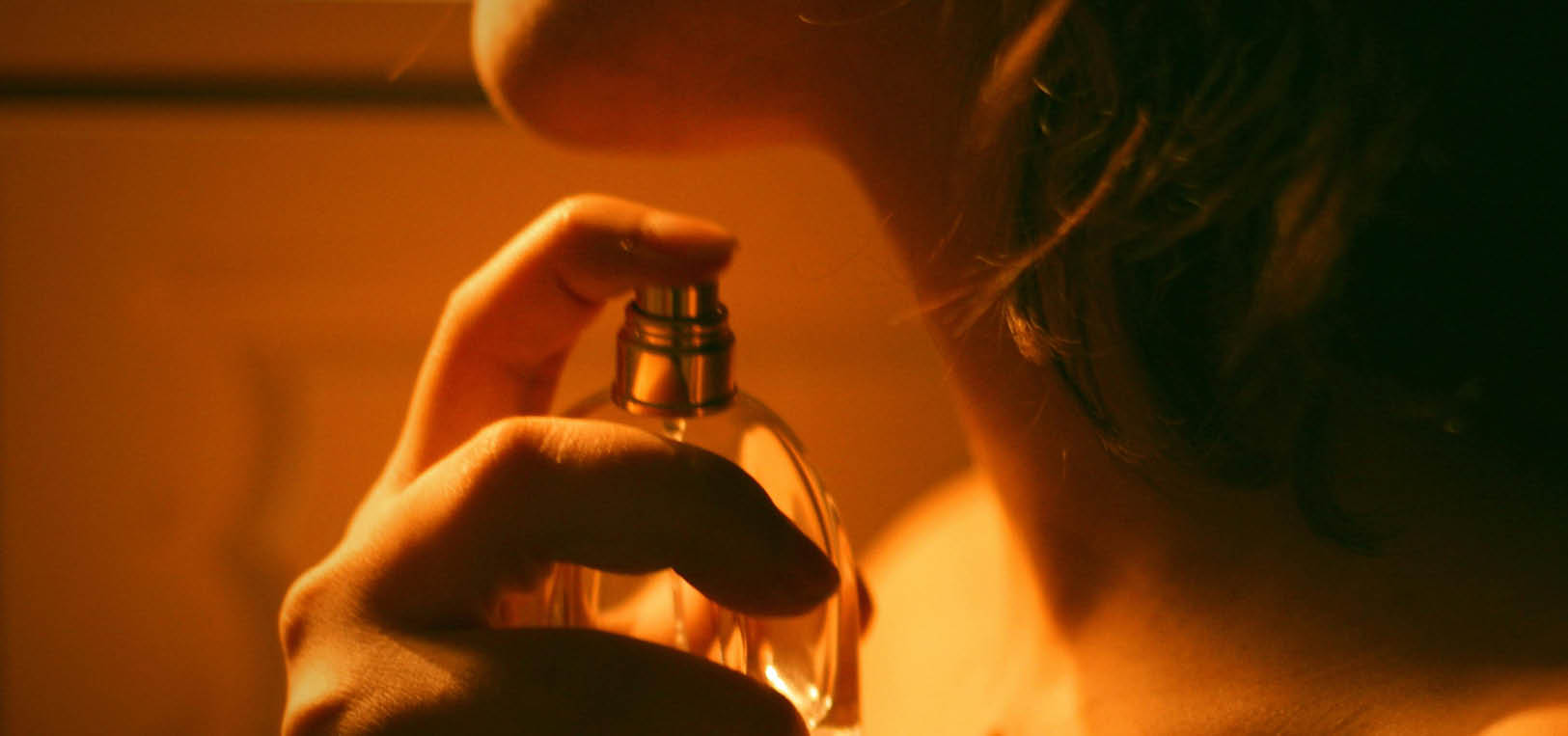
What is oud? Once known only to connoisseurs and perfumers in the Middle East and Asia, this rare and luxurious fragrance ingredient has captured the attention of the global perfume world. Derived from the resinous heartwood of the Aquilaria tree, oud – also known as agarwood – is prized for its deep, complex scent and its rich cultural history. In this guide, we explore what oud is, how it’s formed, why it’s so valuable, and how it has become one of the most sought-after notes in modern perfumery.
- - - Advertisement - - -
What is Oud?
Oud, also called oudh or agarwood, is a fragrant, resinous wood used in incense and perfumery. It forms in the trunk and roots of Aquilaria trees and is especially popular in the Middle East and the Arab world, although it is becoming increasingly embraced by Western brands. Used for thousands of years, oud has been valued in Hindu, Buddhist, Muslim, and Chinese cultures. Reflecting its rarity and cost, oud is often called “liquid gold,” while agarwood is sometimes referred to as the “Wood of Gods.” Oud is generally used as a base note in perfumery and is traditionally paired with rose.

Aquilaria tree | Photo by DXLINH, via Wikimedia Commons, licensed under CC BY-SA 3.0
- - - Advertisement - - -
How Does Oud Form?
Oud only forms in Aquilaria trees that have been infected with a particular type of mold. In response to the infection, the tree produces a dark, fragrant resin that saturates the heartwood. This transformation – from pale, scentless wood to dense, aromatic resin – is triggered by the Ambrosia beetle, which bores into the tree and creates a pathway for mold spores to enter. In cultivated plantations, trees are inoculated with the fungus to initiate this resin-producing process artificially.
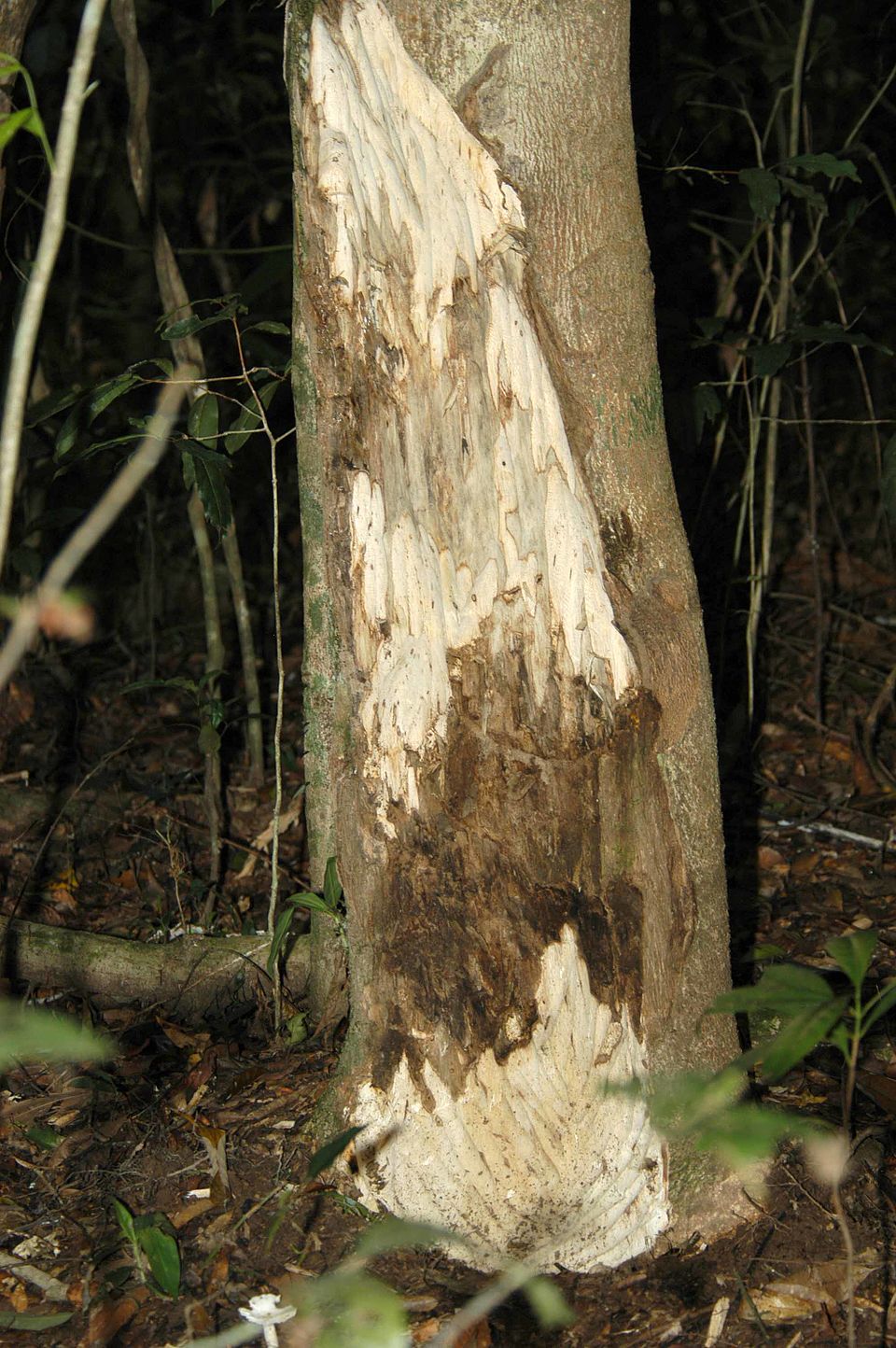
Aquilaria trunk showing both blackened, infected parts and lighter, uninfected parts | Photo by Blaise Droz, via Wikimedia Commons, licensed under CC BY-SA 3.0
- - - Advertisement - - -
Why Is Oud So Expensive?
Oud can only be harvested from infected trees – and fewer than 8% of wild Aquilaria trees naturally produce resin. The yield of oud oil is incredibly low: 70kg of wood produces not more than 20ml of oud oil. Because of these limitations, few fragrance houses use pure oud. Instead, most rely on synthetic alternatives that attempt to replicate its complex aroma.
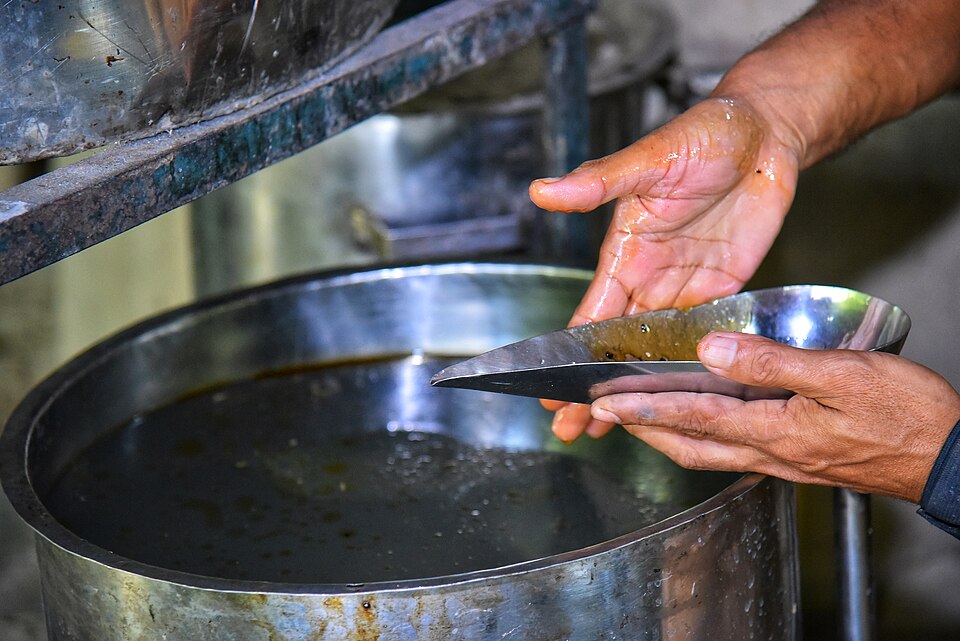
Agar oil | Photo by পাপৰি বৰা, via Wikimedia Commons, licensed under CC BY-SA 4.0


When Was Oud First Used?
The history of oud spans thousands of years. The ancient Egyptians burned agarwood incense during funerary rites over 3,000 years ago. Oud is mentioned in both the Old and New Testaments of the Bible. In 65 CE, Dioscorides documented agarwood’s medicinal properties in his text Materia Medica, citing its use for freshening breath and treating dysentery and liver pain.
In 6th-century Japan, Cambodian-sourced oud was recorded in the Nihon Shoki, the country’s second-oldest historical text. Agarwood has long been revered across Hinduism, Buddhism, Chinese folk religion, and Islam.
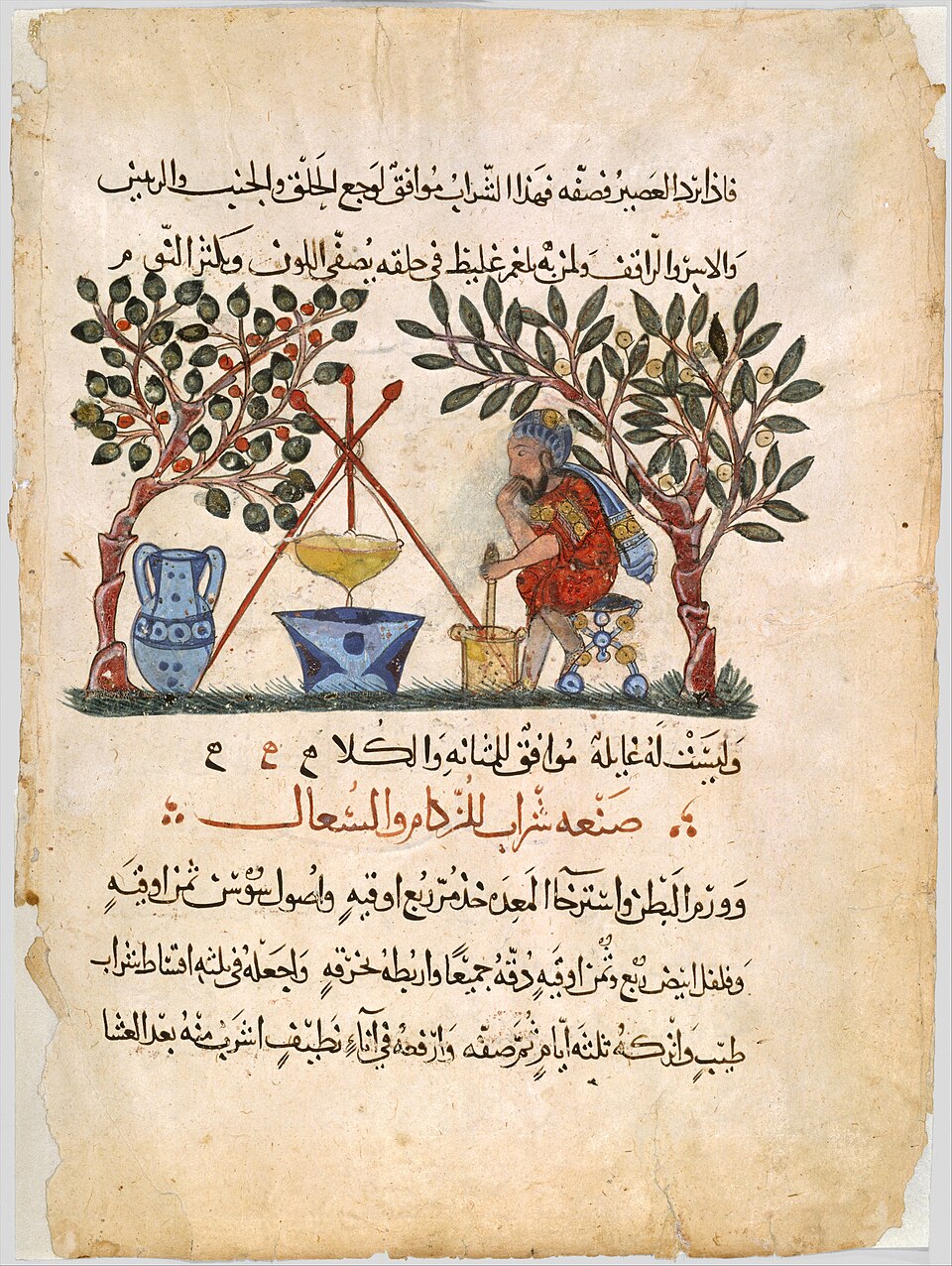
Physician Preparing an Elixir, Folio from a Materia Medica of Dioscorides (MET, 13.152.6) | Image courtesy of the Metropolitan Museum of Art, via Wikimedia Commons. Public domain.

- - - Advertisement - - -
Oud in Middle Eastern Traditions
In the Middle East, oud is deeply embedded in cultural, spiritual, and social traditions. More than just a fragrance, it symbolizes heritage, hospitality, and refinement. It is commonly used during religious ceremonies, weddings, and as a welcoming gesture in homes. Oud incense is often burned in mosques during Islamic holidays, where its smoke is believed to purify the air. In traditional Middle Eastern perfumery, oud represents luxury, prestige, and lineage.
The traditional Arabic incense or perfume burner is called a mabkhara (مبخرة). Commonly made from metal, ceramic, or wood and ornately decorated, it is used to burn oud, bakhoor, or other resins or scented chips.
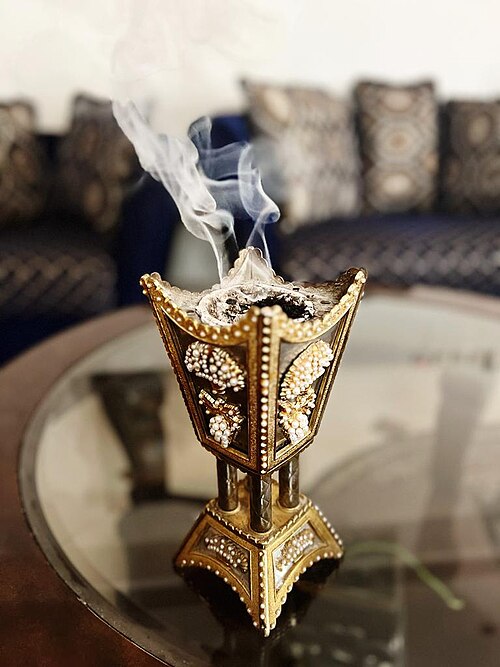
Mabkhara burning oud in Saudi Arabia | Photo by Fseddiqi1983, via Wikimedia Commons, licensed under CC BY-SA 4.0

- - - Advertisement - - -
Oud’s Rise in Western Fragrance
Luxury and niche perfume houses are increasingly incorporating oud into their fragrance profiles. While traditionally paired with rose, Western perfumers often blend it with citrus, vanilla, or floral notes to create more accessible compositions for broader audiences.
- - - Advertisement - - -
What Does Oud Smell Like?
Oud has a deep, complex scent profile often described as woody, musky, leathery, animalic, earthy, smoky, and sometimes slightly sweet or spicy. Depending on its origin and how it’s distilled, different characteristics of the scent become more dominant. Some ouds are extremely pungent and bold, while others are smooth, warm, and more accessible and inviting.
- - - Advertisement - - -
What Is the Difference Between Natural and Synthetic Oud?
Natural oud is derived from the resinous heartwood of Aquilaria trees infected by the mold Phaeoacremonium parasitica. Due to its rarity and the low yield of oil per kilogram of wood, it is extremely expensive. Synthetic oud is created in labs to mimic the scent of natural oud. While it can come close in aroma, synthetic oud often lacks the richness, subtlety, and evolving character of the natural version.
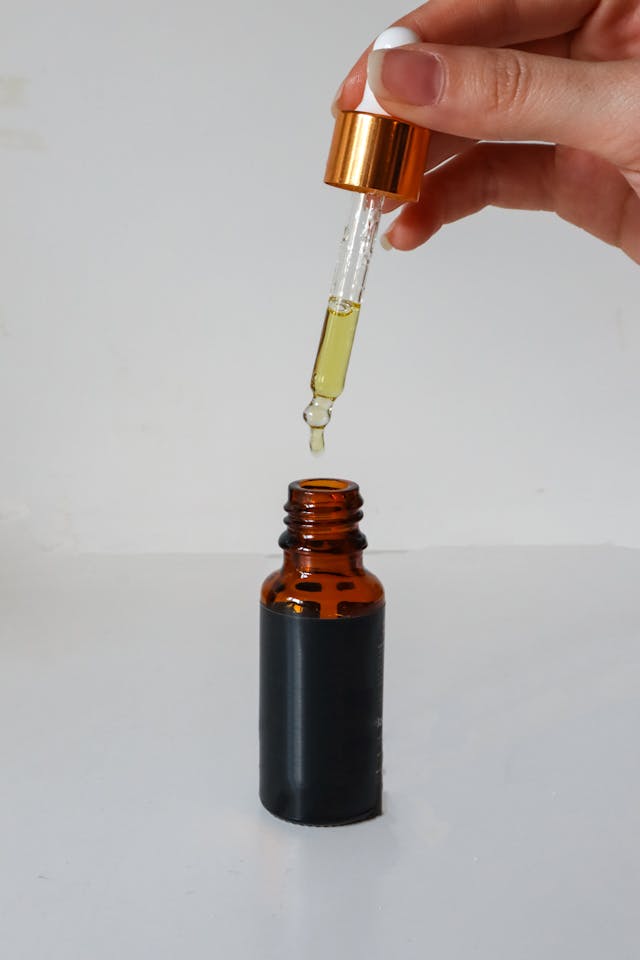
Photo by Pexels/Doğu Tuncer
- - - Advertisement - - -
Types of Oud Used in Fragrance
Oud types are typically categorized by either region or olfactory profile. Common regional styles include:
-
Hindi (Indian): Animalic, spicy, woody, and fecal
-
Cambodi: Sweet, smooth, with hints of caramel and honey
-
Borneo: Lighter, more floral, with touches of vanilla
-
Papuan: Light, woody, floral, with green, leafy undertones
-
Vietnamese: Rich, peppery, tart
-
Thai: Similar to Cambodi, but with a sour edge
-
Chinese: Citrusy, musky, and strongly animalic
-
Laotian: Pungent, animalic, smoky – dries down to woody sweetness
-
Malaysian: Smoky, earthy, with occasional fruity notes
-
Indonesian: Varied, but often smoky and incense-like
Importantly, these names may refer more to the distillation style than the geographic origin of the wood. For instance, “Hindi” oud is now often made from non-Assam trees distilled in the traditional Indian style.
Synthetic ouds are created to imitate these natural profiles and can also vary widely – some leaning woody, others leaning leathery or animalic.
- - - Affiliate Advertisement - - -
How Should I Wear Oud?
Oud is potent and long-lasting, so less is more. Begin with just one or two sprays or dabs. Oud fragrances are generally best suited for evening wear, cooler seasons, and formal occasions. Avoid rubbing the perfume into your skin – dab gently to preserve the scent’s integrity. Oud also layers beautifully with floral, citrus, or spicy perfumes if you’d like to experiment.
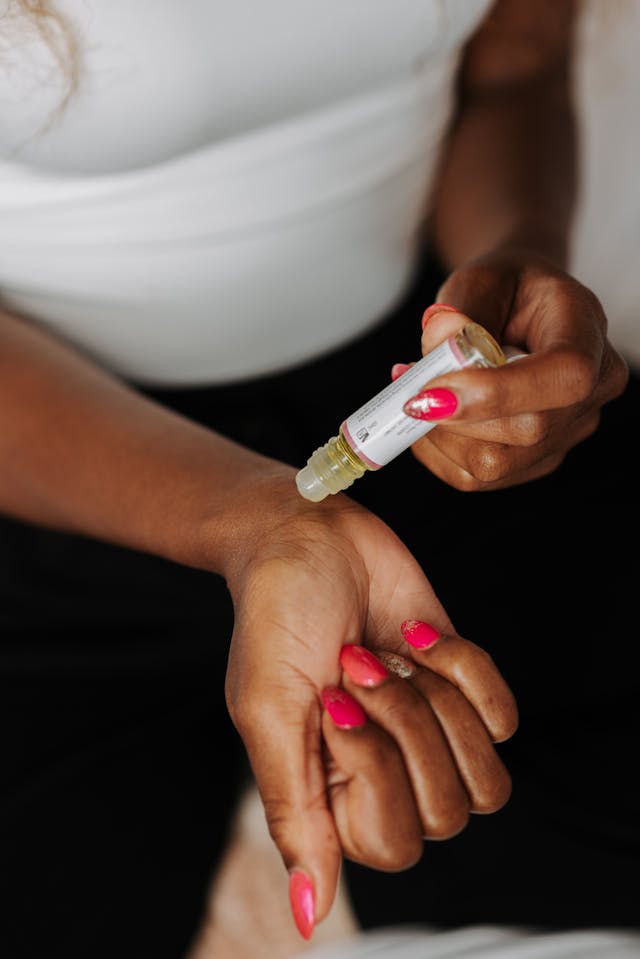
Photo by Pexels/Anete Lusina
- - - Affiliate Advertisement - - -
Is Oud Sustainable?
Wild agarwood-producing trees have been overharvested, placing pressure on natural populations. As a result, Aquilaria species are now protected under the CITES (Convention on International Trade in Endangered Species) agreement. To meet global demand while protecting forests, sustainable plantations have been developed in countries like Malaysia, Sri Lanka, and Vietnam. Trees are now often grown and inoculated with mold under controlled conditions, with varying success depending on local methods and environmental factors.
- - - Affiliate Advertisement - - -
What is Oud? Final Thoughts
Oud is more than just a fragrance note – it is a story, a ritual, a cultural bridge. With roots in sacred tradition and a rising place in modern perfumery, oud remains one of the most complex, evocative, and luxurious ingredients in the world of scent. Its rarity, depth, and versatility make it beloved across continents, from the incense-filled halls of mosques and temples to the runways of high fashion and the shelves of designer boutiques.
Whether you’re drawn to its smoky richness, its animalic edge, or its symbolic weight, oud holds a powerful place in the olfactory landscape – and it’s not going anywhere anytime soon.
- - - Affiliate Advertisement - - -

London College of Fashion alumna (PGCert Fashion Buying & Merchandising). 15 years in fashion across styling, buying & merchandising, trend forecasting, e-commerce, and marketing. Includes roles at Vivienne Westwood and multi-brand retail stocking 50+ brands including Adidas, Nike, and Puma.